Evacuation poster
At the centre stands a poster explaining what civilians should do during evacuation. Its diagrams turn an enormous emergency into actions people could understand and follow.
A travelling museum exhibition
We can speak of Chornobyl in numbers. Or through objects: the case of an instrument, protective gear, a newspaper printed before the accident. We will show you a few here. The rest are worth meeting in person.
ARCHIVE / 1986
Seven minutes from 1986. This footage from Suspilne’s archive shows power plant workers, cleanup workers and miners. Their work remains on film.
Watch the footage 1986 / 07:25 / SUSPILNE MEDIA ARCHIVE01 / INTRODUCTION
On 26 April 1986, the accident at Unit 4 of the Chornobyl Nuclear Power Plant changed many lives. Protective clothing, instruments, printed testimony and original artworks stand side by side in this exhibition. Each object gives that date a human dimension.
II / THE COLLECTION AT A GLANCE
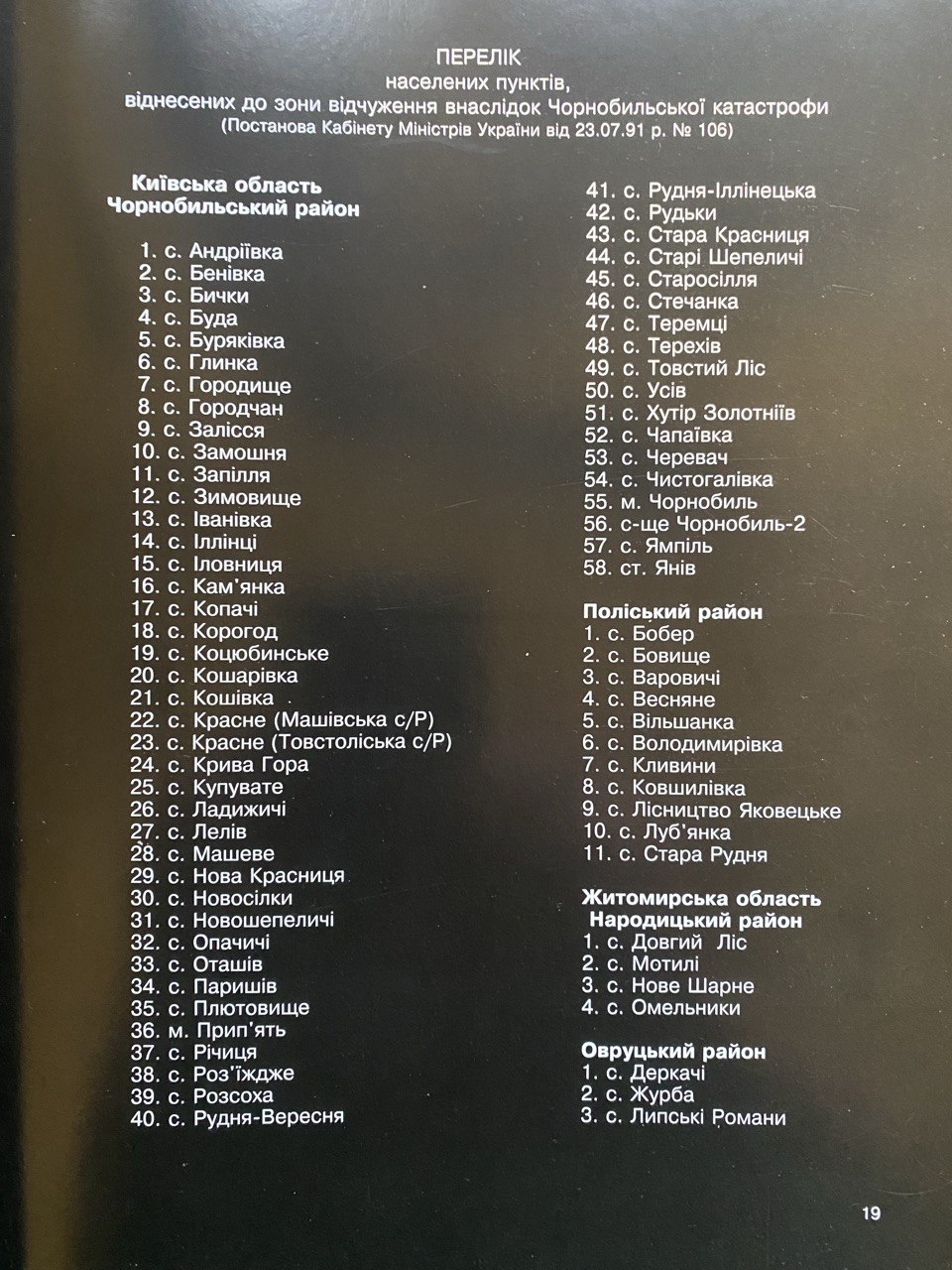
Seven strands of the collection, from personal documents to equipment made for protection. This is a map of what the museum holds. A few objects appear in closer detail below.
An original letter from US Vice President Al Gore to academician Oleksandr Kliuchnykov, a Hero of Ukraine; an original letter from the Fukushima nuclear plant (Japan, 2011); a complete set of liquidator access passes from 1986–2015 and Kliuchnykov’s personal awards. Also displayed are documents of Professor Valerii Shakhovtsov, who led the Chornobyl operational headquarters on behalf of the Academy of Sciences of Ukraine, and a certified high-strength bolt from the New Safe Confinement arch.
National Bank of Ukraine silver medals set with real diamonds and natural rubies; an O. Koviniev “20 years of Chornobyl NPP” medal from an edition of 50; an experimental folding “Slavutych 1986/1991” medal from the Leningrad Mint. The collection also includes the complete colour-printed NBU “Chornobyl. Rebirth” wildlife coin series and a limited 2021 Niue silver coin, “Chornobyl. Tragedies of Humanity”.
Original Soviet and foreign newspapers and magazines from April and May 1986; porcelain with emblems from the Chornobyl plant canteen; and original special-meal vouchers. Mineral-water and Cabernet wine bottles recall everyday life for cleanup workers in the Zone.
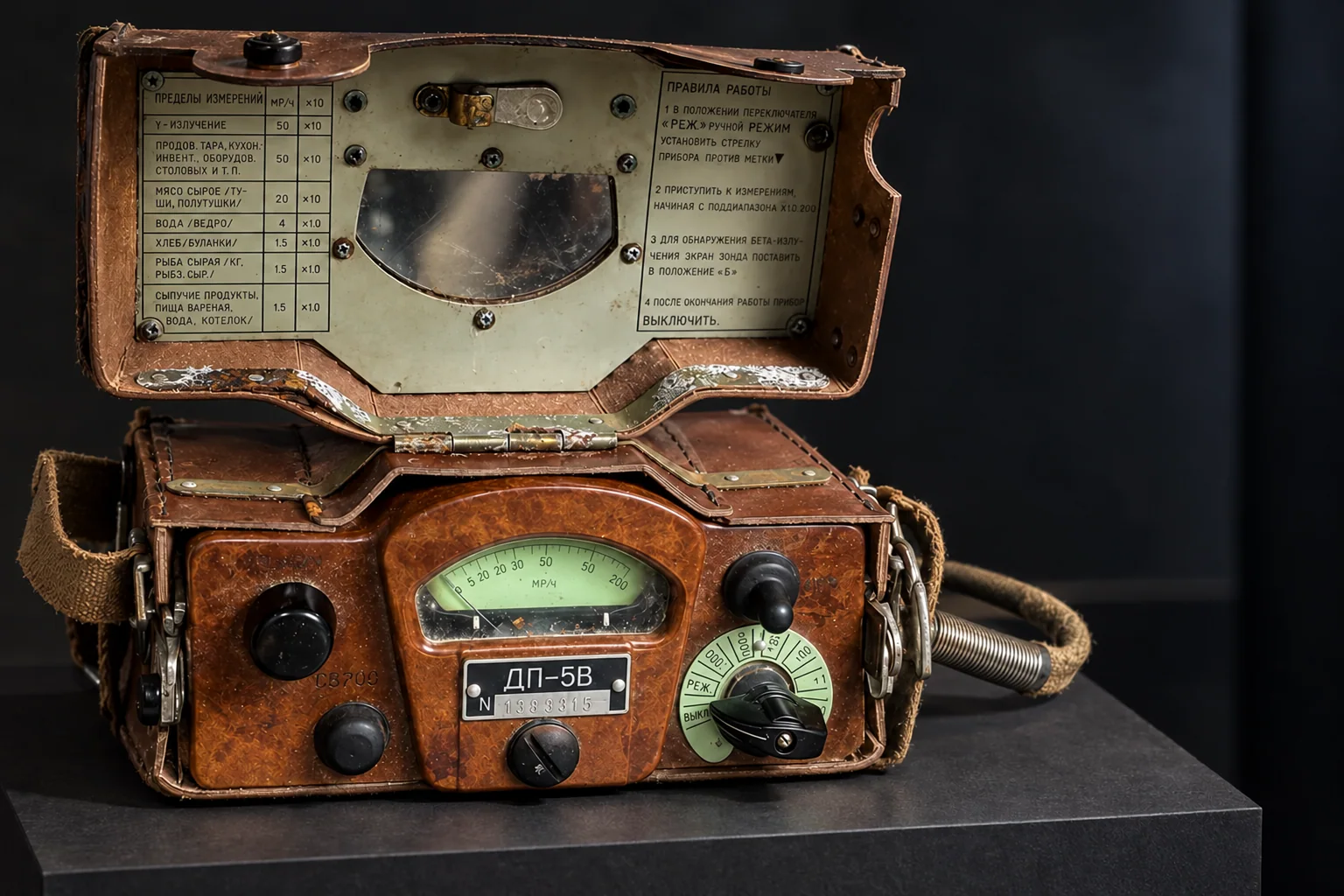
ID-1 and DP-5 dosimeters, L-1 and OZK protective suits. A remarkable set of heavy improvised lead armour was made by liquidators from lead sheets to clear graphite fragments from the roof of Unit 3.
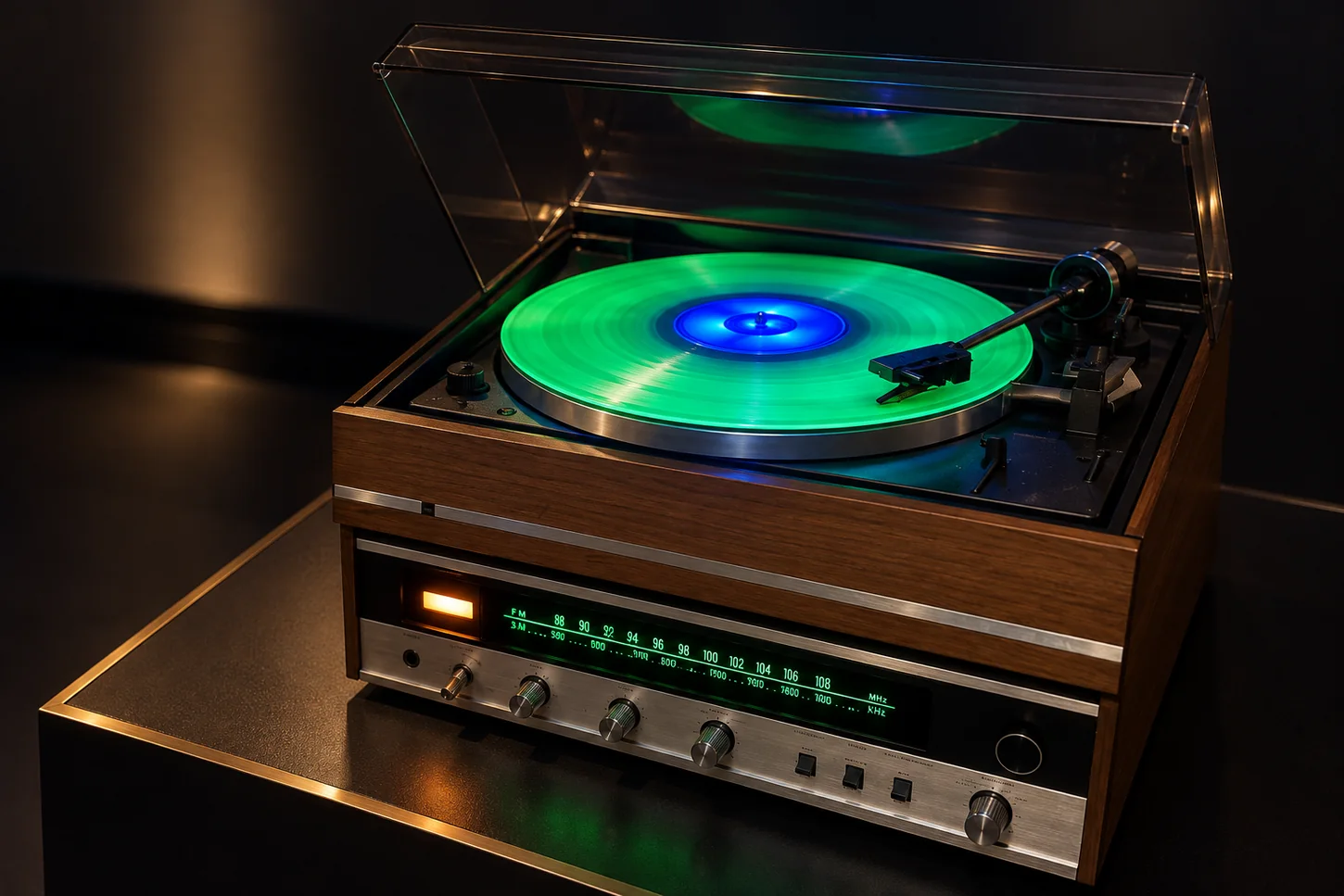
Documentary films shot by scientists beneath the sarcophagus inside Unit 4; limited “Sounds of Chornobyl” glow-in-the-dark vinyl records. The “AZ-5 Button” interactive simulator plays declassified recordings of Chornobyl plant dispatchers and the first fire crews.
A large-format reproduction of Ivan Marchuk’s “Chornobyl Madonna” bearing his original handwritten signature; Petro Yemets’s original painting “Nightingale Season”; Yurii Kostenko’s colour helicopter photograph of the destroyed reactor in the first days after the accident; and a rare Japanese photo book about villages evacuated from the Zone.
An artistic and technical model made from decontaminated fragments of a hostile Shahed-136 / Geran-2 drone that damaged exterior elements of the New Safe Confinement arch during the current war.
OPERATIONAL STAFF / MEMORIAL INSTALLATION
A memorial reconstruction of the workspace of Valeriy Shakhovtsov, head of the Chornobyl plant’s operational staff for the Academy of Sciences of the Ukrainian SSR. Documents, maps, communications and instruments meet on one desk. Select an object to explore its place in the story.
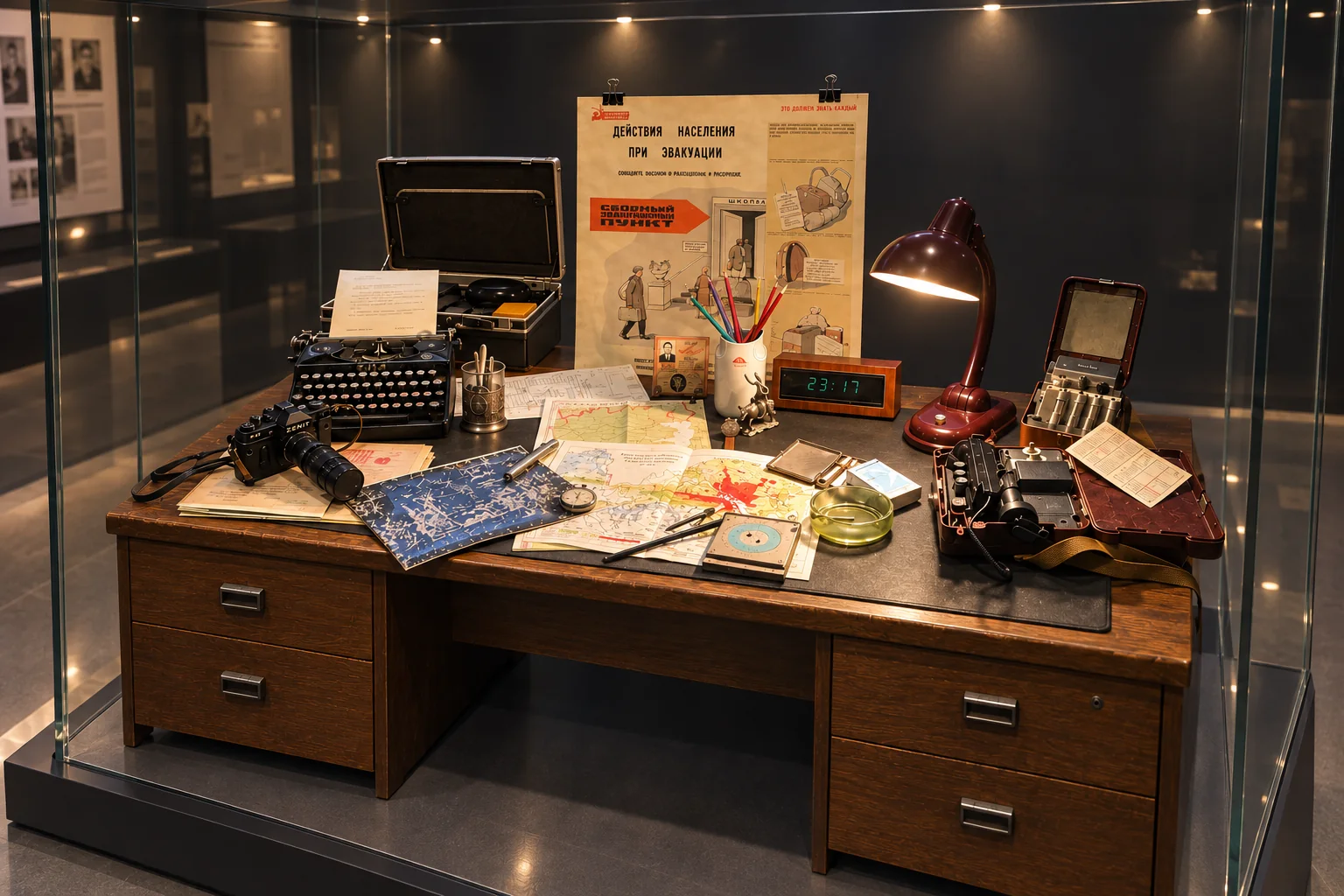
Choose an object on the desk
At the centre stands a poster explaining what civilians should do during evacuation. Its diagrams turn an enormous emergency into actions people could understand and follow.
A small certificate gives this history a name. The museum passport identifies Valeriy Shakhovtsov’s liquidator certificate and personal effects as original exhibit objects.
Explore the objects up close ↗An open briefcase sits behind the typewriter. Explore a case in detail on its own page: first-aid kit, documents, money, savings book, bonds and party card.
Explore the case and its contents ↗The typewriter, papers and folders evoke the staff’s daily work of recording, checking and passing on information. Alongside measurements, there were always words on paper.
A map of the Kyiv region and a camera bring two views of the terrain together. The exhibit passport also describes a model of a special camera for photography from a Mi‑8 helicopter.
Explore the objects up close ↗At right are a field telephone and measuring equipment. The passport lists a TA‑57 telephone, a radiometer and an ID‑7 dosimeter charger (ZD‑5).
Explore the objects up close ↗The lamp, green clock display, ashtray and vase form another layer of the scene. According to the passport, the gallery’s warm light gives way to UV light that reveals luminescent details.
Explore the objects up close ↗The image shows the warm lighting state. The installation’s UV lighting can be seen at the exhibition.
02 / PROTECTION
Two figures. Two sets of equipment. Choose a display case to explore what each contains.

01 / Left display case
Equipment used to collect radioactive debris from the reactor roof.
02 / Right display case
A set of measuring instruments, protective equipment and personal belongings.
 Visualization based on a photograph of a museum object
 03 / MEASUREMENT
Your eye finds the needle first. Then the scale, selector, probe and worn case come into view. Select a marker to see what each part did.
04 / MACHINES IN MINIATURE
A childhood dream of space stands beside a machine that worked near the destroyed reactor. Select either marker to discover its story.
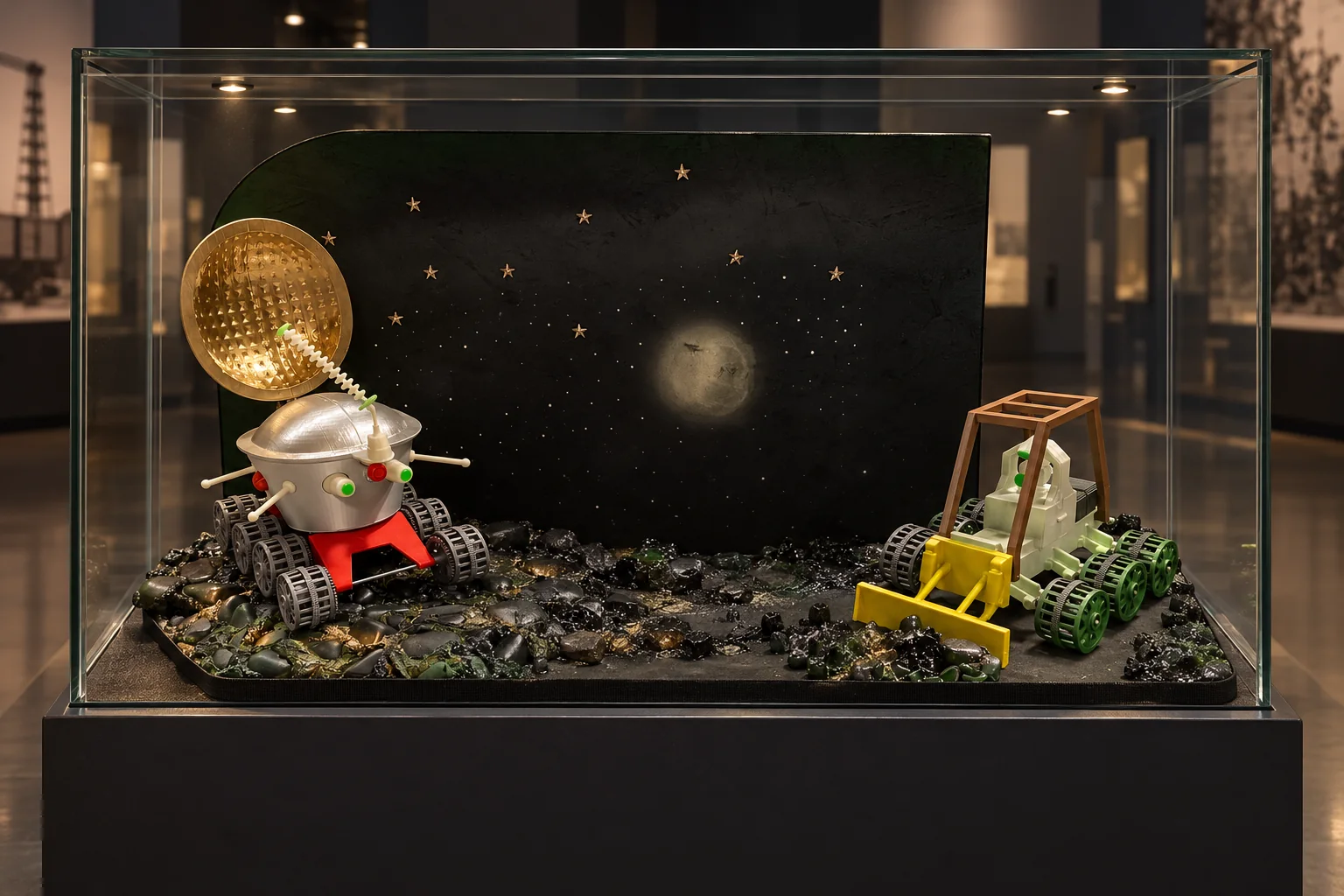 Visualization based on a photograph of the museum diorama
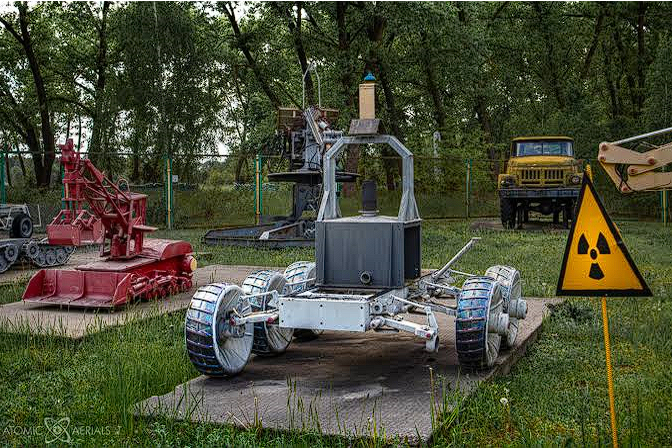
On the left is a “Lunokhod-2” toy familiar to children in the late 1970s. On the right is a model of STR-1. Its designers drew on lunar rover engineering to clear radioactive debris where it was dangerous for people to work.
A miniature copy of a Soviet lunar rover. Toys like this once appeared on shop shelves; this one is now part of the museum’s story.
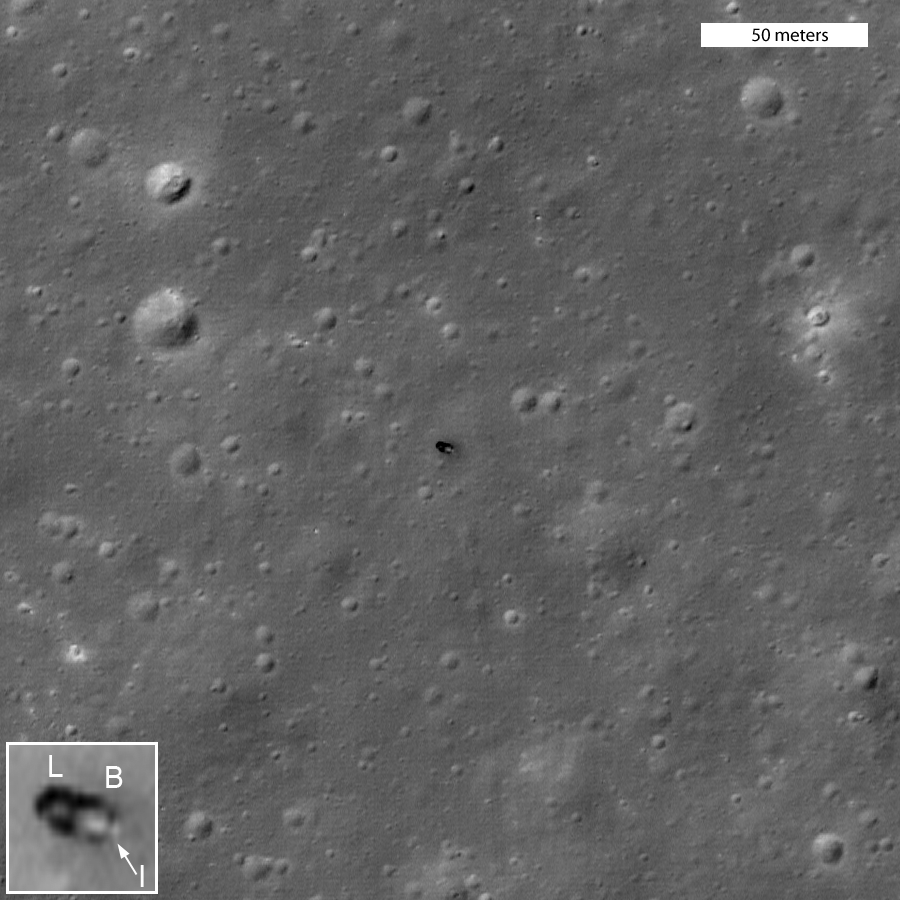
The real STR-1 drew on lunar rover chassis design. Controlled remotely, it cleared radioactive debris and cleaned surfaces on the plant’s roofs.
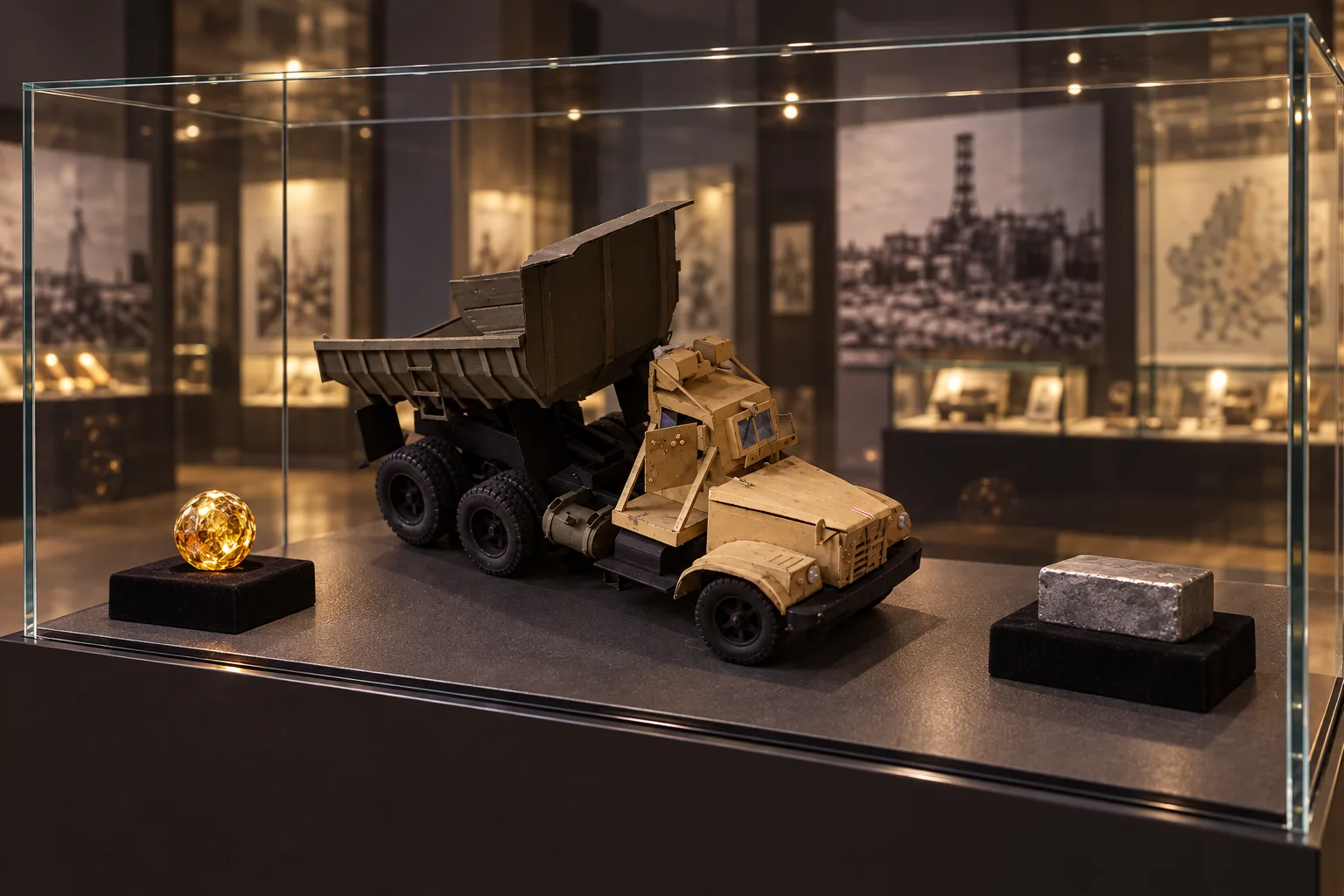 Visualization based on a photograph of the museum model
The KrAZ‑256B1‑030 was no ordinary dump truck. Beside the model, under glass, are a sphere of protective glass and a sample of lead. Select an object to explore the design.
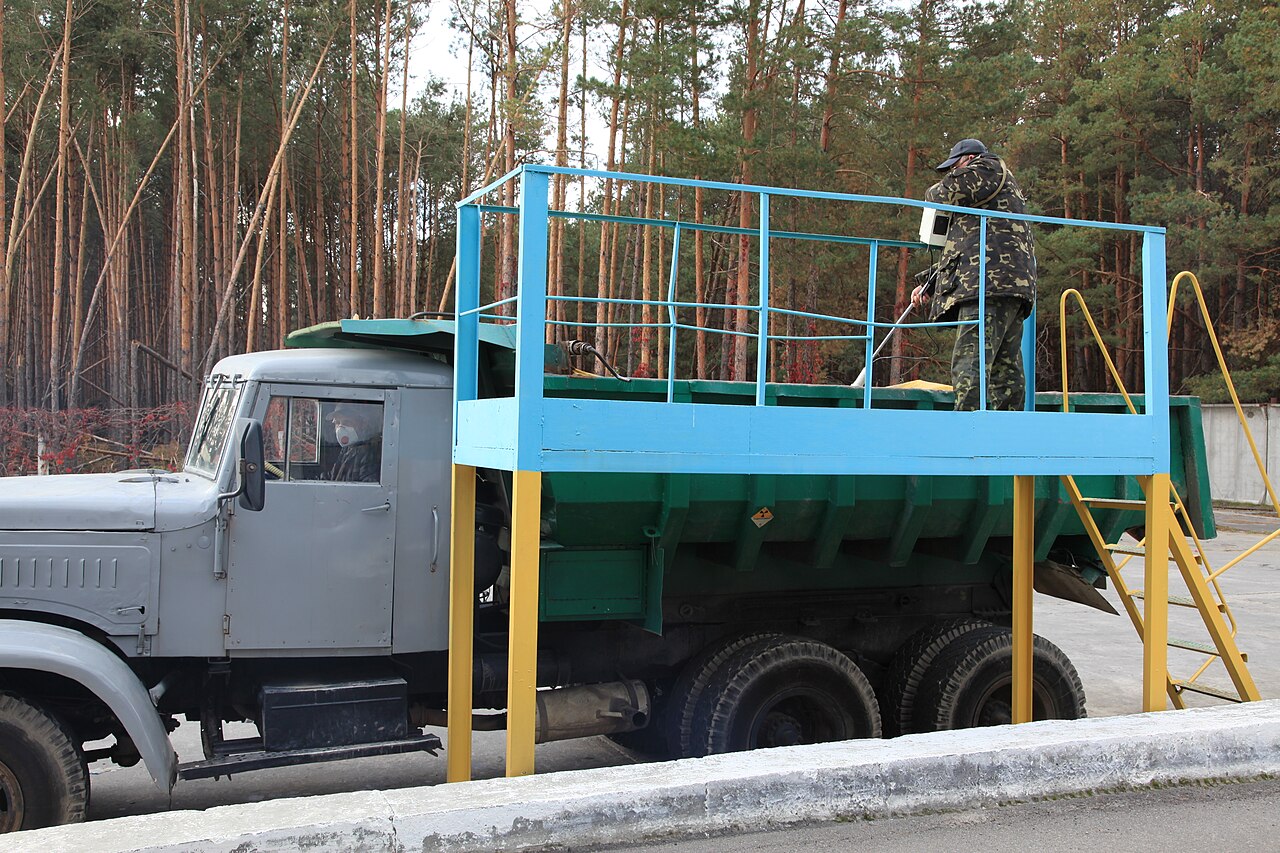
A real KrAZ‑256 in the Chornobyl zone, 2010. This truck has a standard cab. The 1986 special version appears in the factory archive.
IAEA / DANA SACCHETTI · CC BY-SA 2.0 ↗05 / ARCHIVE
“The parade that death watched” recalls the May Day demonstration on Khreshchatyk in Kyiv on 1 May 1986, just five days after the Chornobyl accident. At the centre of the display is an authentic invitation to the government viewing stand, surrounded by photographs and objects from the celebration.
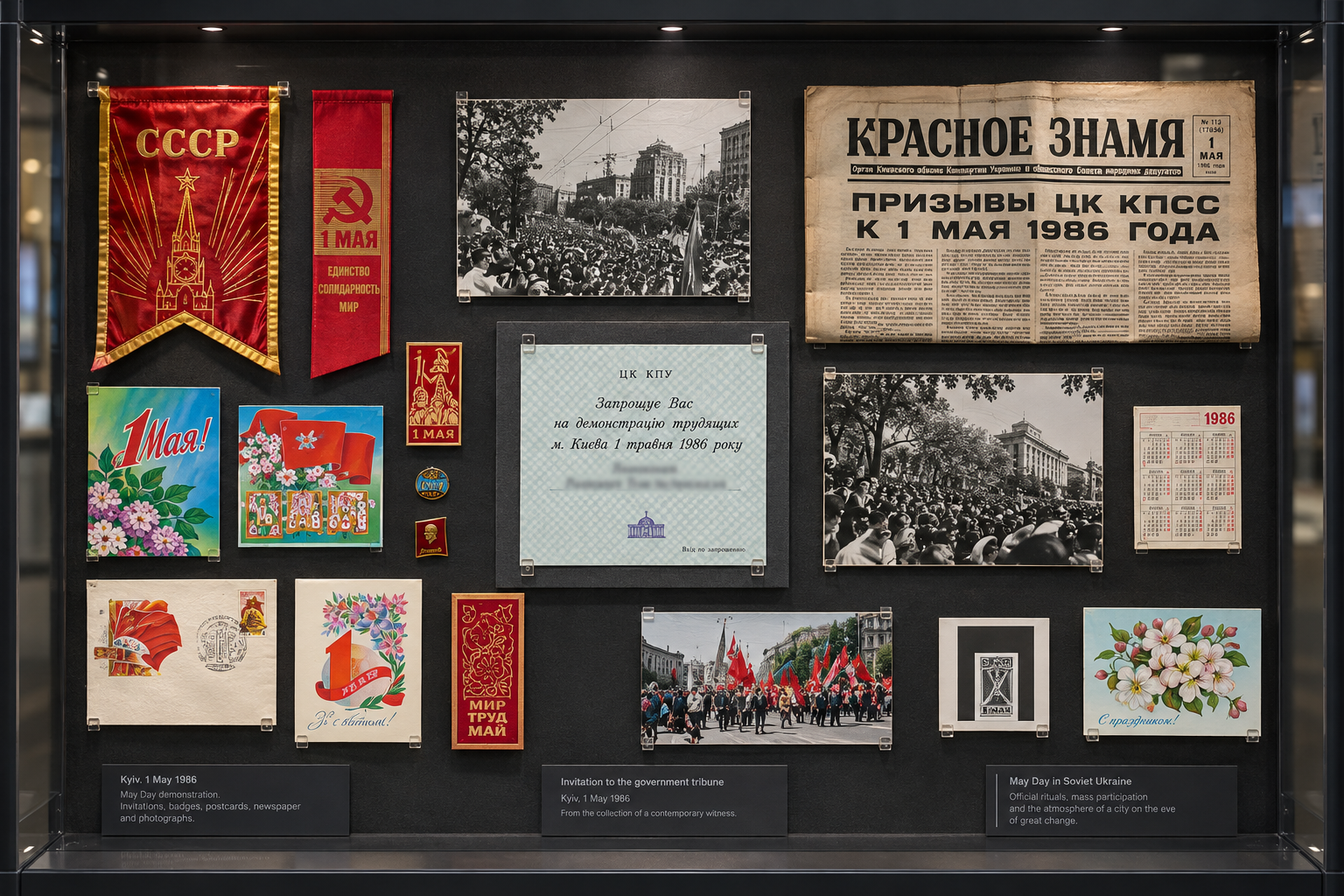 Exhibition visualization based on museum materials
 The original invitation to the government viewing stand sits at the centre. Personal names are obscured; the document and the day it names are what matter here.
Full story and imageThese photographs show Kyiv’s May Day demonstration. The festive crowd walked through the city centre five days after the Chornobyl accident.
Full story and imagePennants, ribbons, badges, pocket calendars and postcards recall the official celebration. Their bright colours now read differently.
Full story and imageThe display visualization shows a May Day front page. The museum collection also holds an issue of Krasnoye Znamya dated 13 April 1986: its call for the holiday was printed before the accident.
Full story and imageCipher telegram No. 398, dated 1 May 1986, reported the radiation situation to Moscow. Beside the festive objects, its spare lines feel especially stark.
Full story and imageA non-postal charity stamp issued by the Ukrainian diaspora in Detroit in 1987. Its figure of Death and the word CHORNOBYL made a political response to the disaster.
Full story and imageINTERNATIONAL RESPONSE / 1991
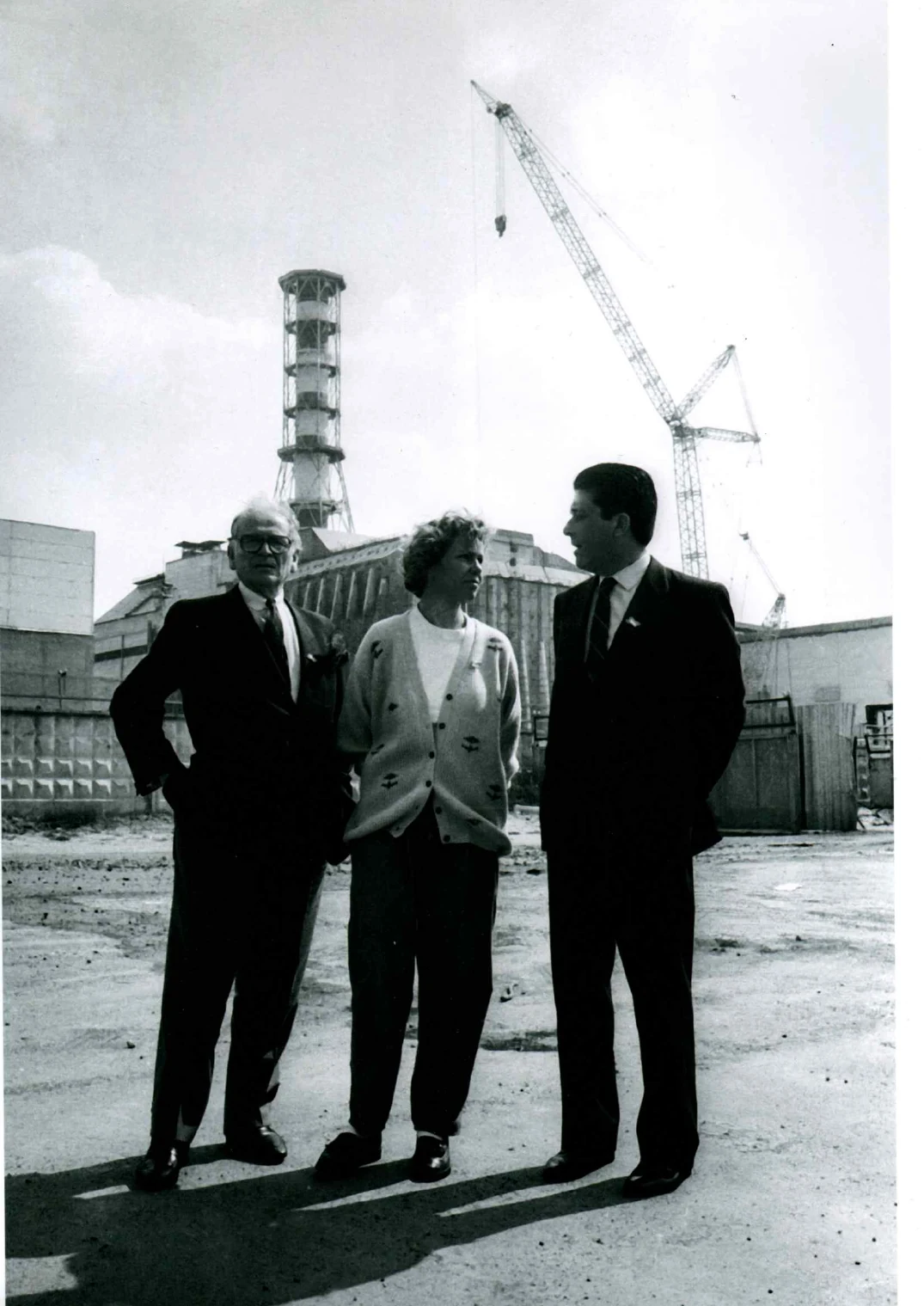
A small medal carries words in several languages and a memory that travelled far beyond Chornobyl. Nearby are photographs of Pierre Cardin and his autograph. Explore each object.
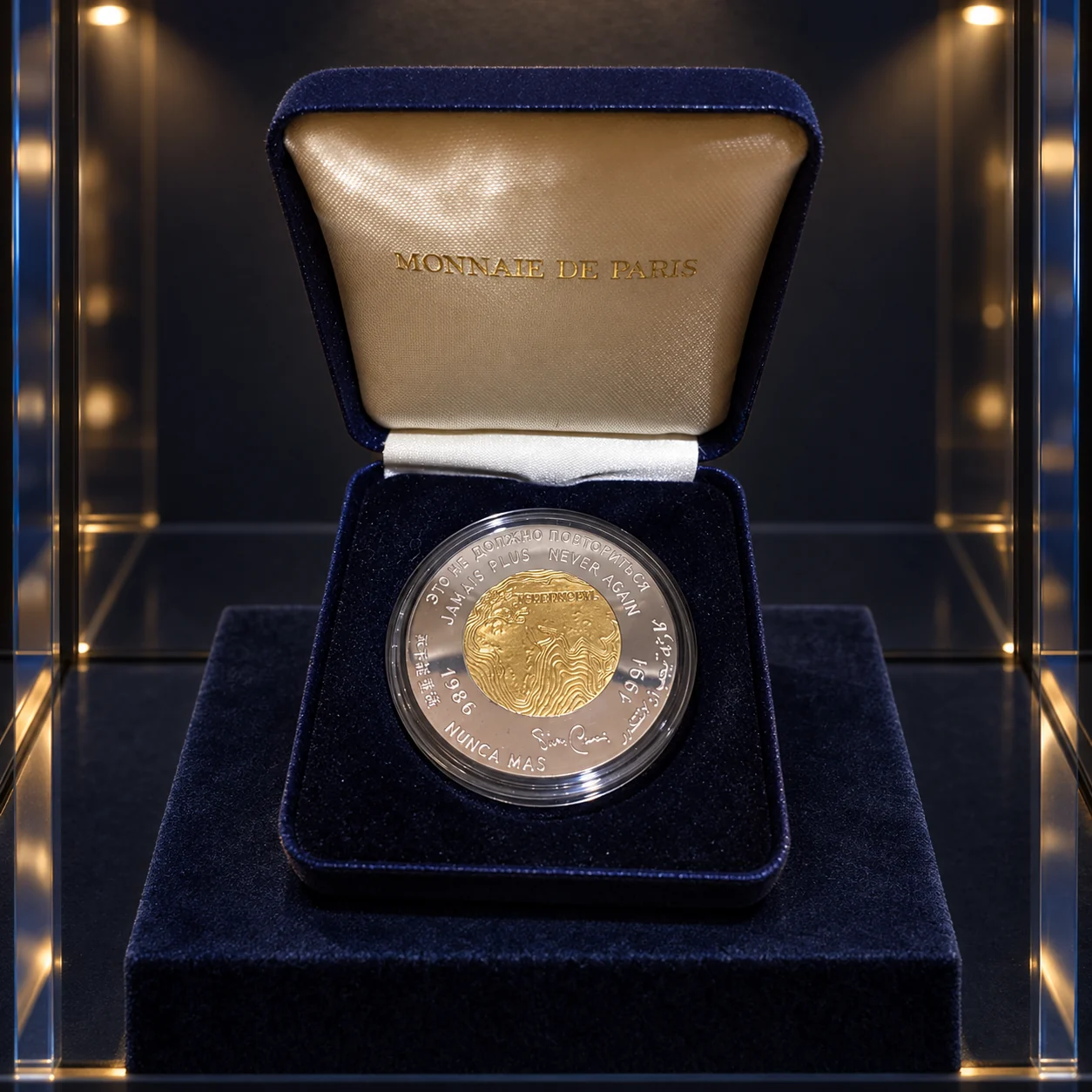
1986 and 1991. Chornobyl and a call not to repeat the tragedy appear in several languages.
Explore the full story ↗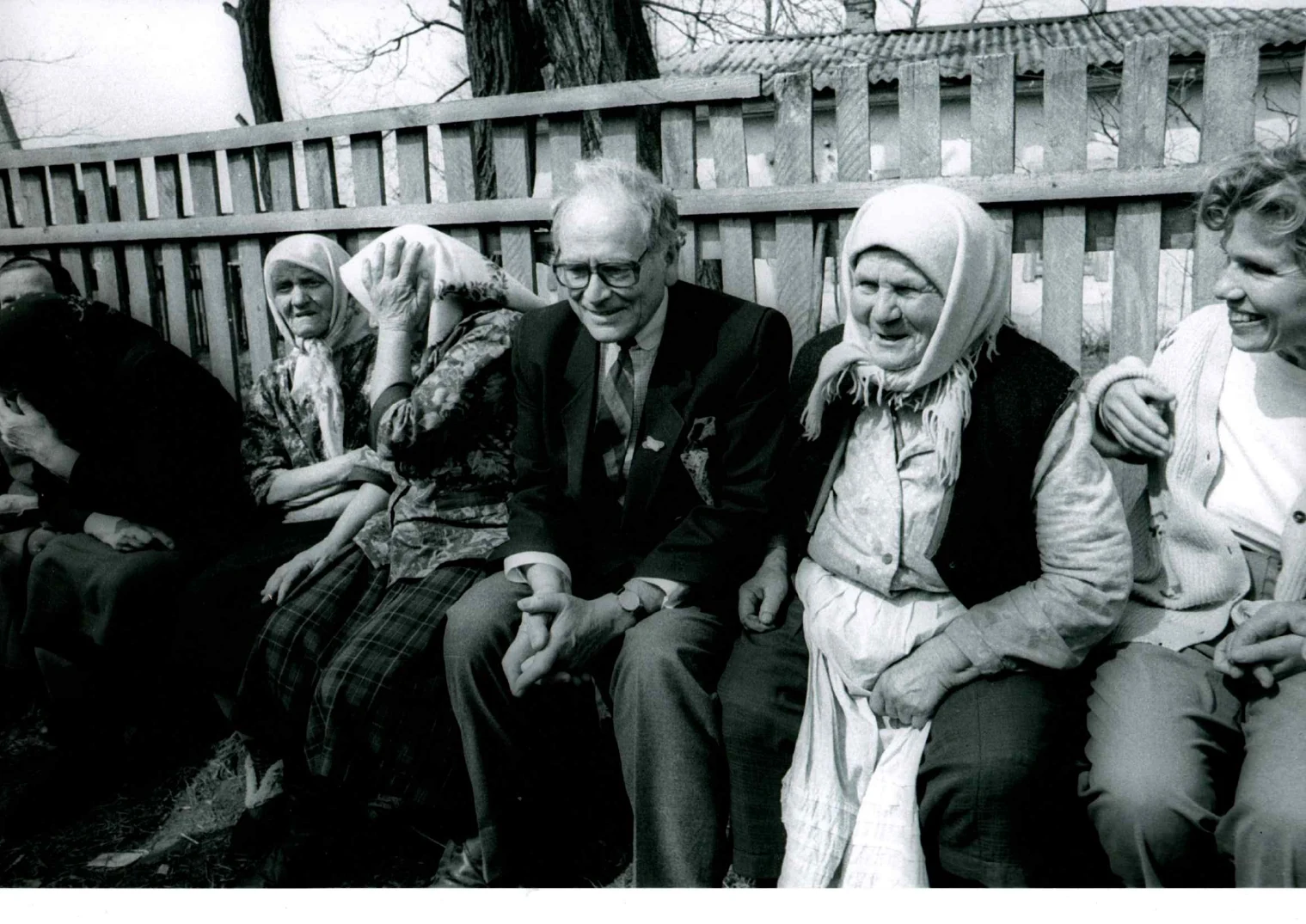
A well-known photograph shows Pierre Cardin seated beside grandmothers from Prypiat.
Explore the full story ↗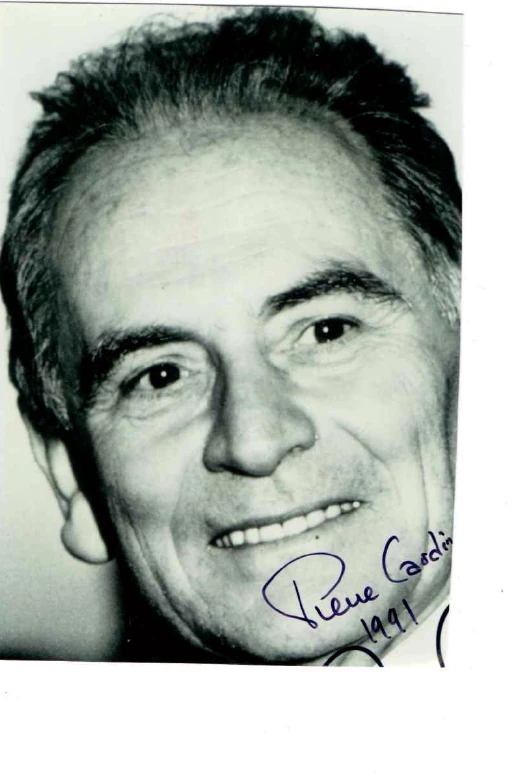
A signed 1991 portrait; a separate certificate concerns the autograph itself.
Explore the full story ↗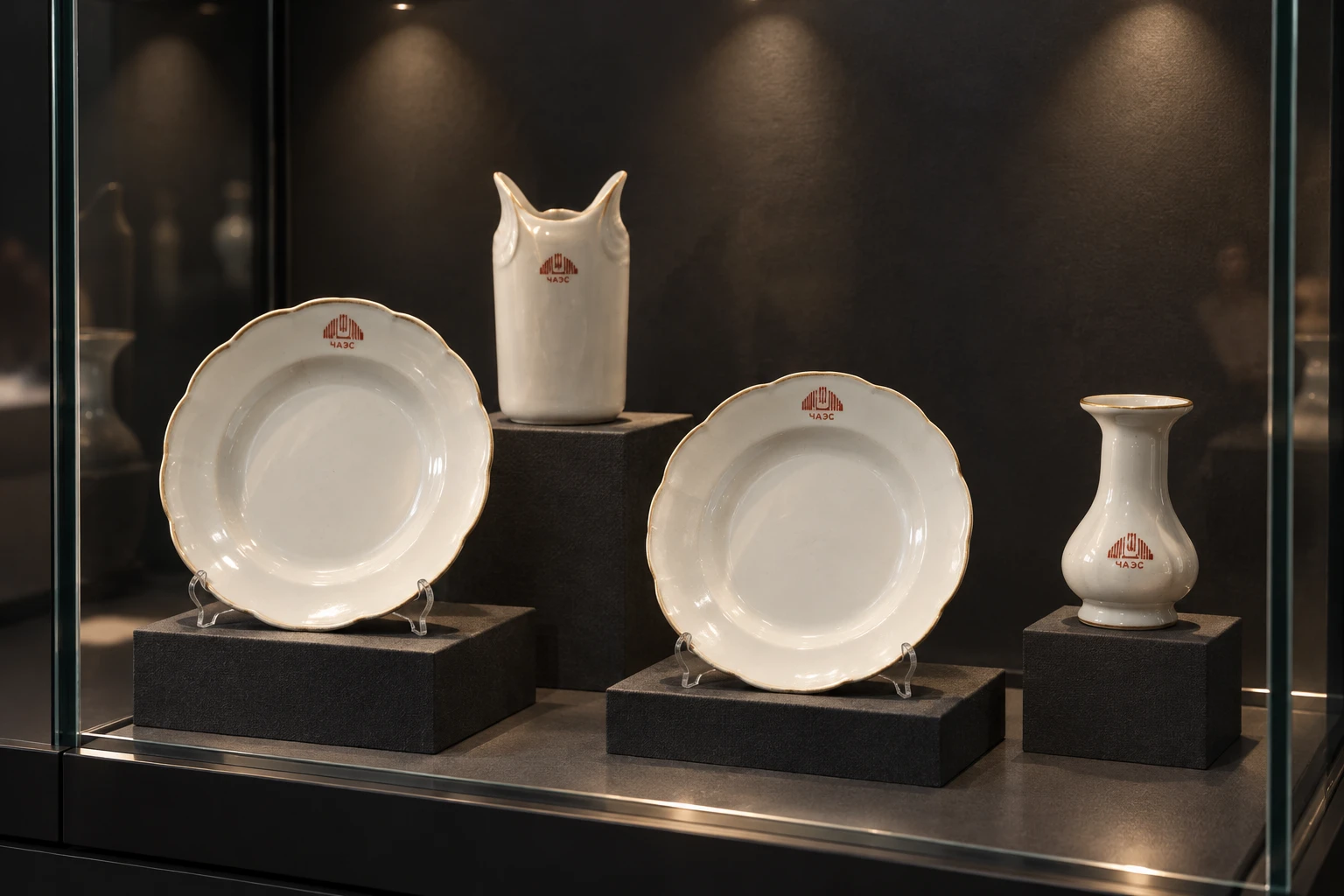
EVERYDAY LIFE / THE CHORNOBYL PLANT CANTEEN
An ordinary meal can disappear from a story this large. The museum holds porcelain from the Chornobyl Nuclear Power Plant canteen. A red emblem on white draws us back to the people for whom the plant was a place of everyday work.
A small red emblem appears on the plates and other porcelain pieces. Up close, it says more about where they were used than any stage setting could.
The Korosten Porcelain Factory made this tableware. Both the maker’s mark and the objects matter here: they recall everyday life at the plant.
06 / ART INSTALLATION
A telephone, a lamp, a clock and a television. The calendar reads 25. In the installation “Pripyat’s Last Night”, tomorrow still seems like it will be an ordinary day.
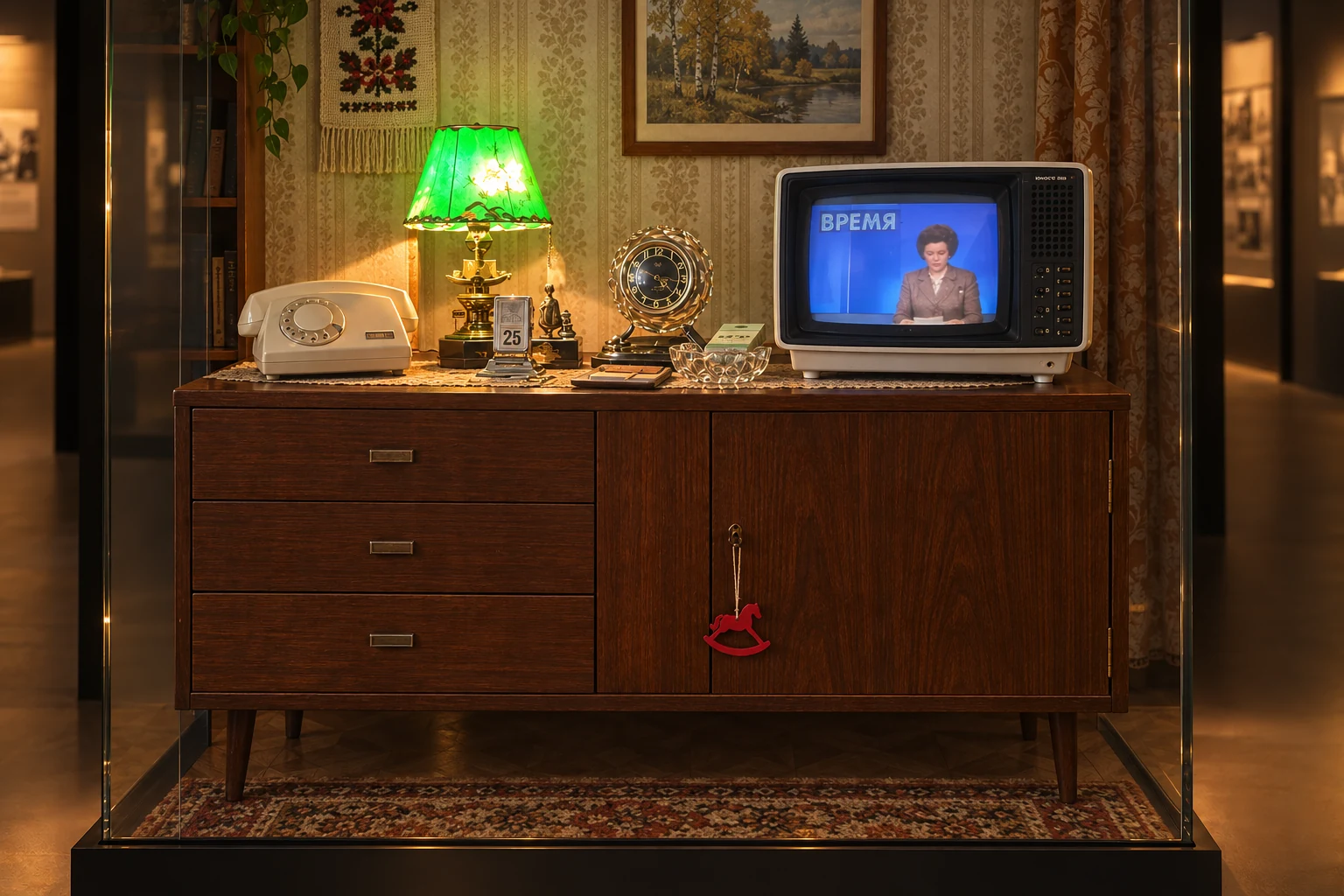 Art installation · visualization based on its photograph
07 / ART AND SOUND
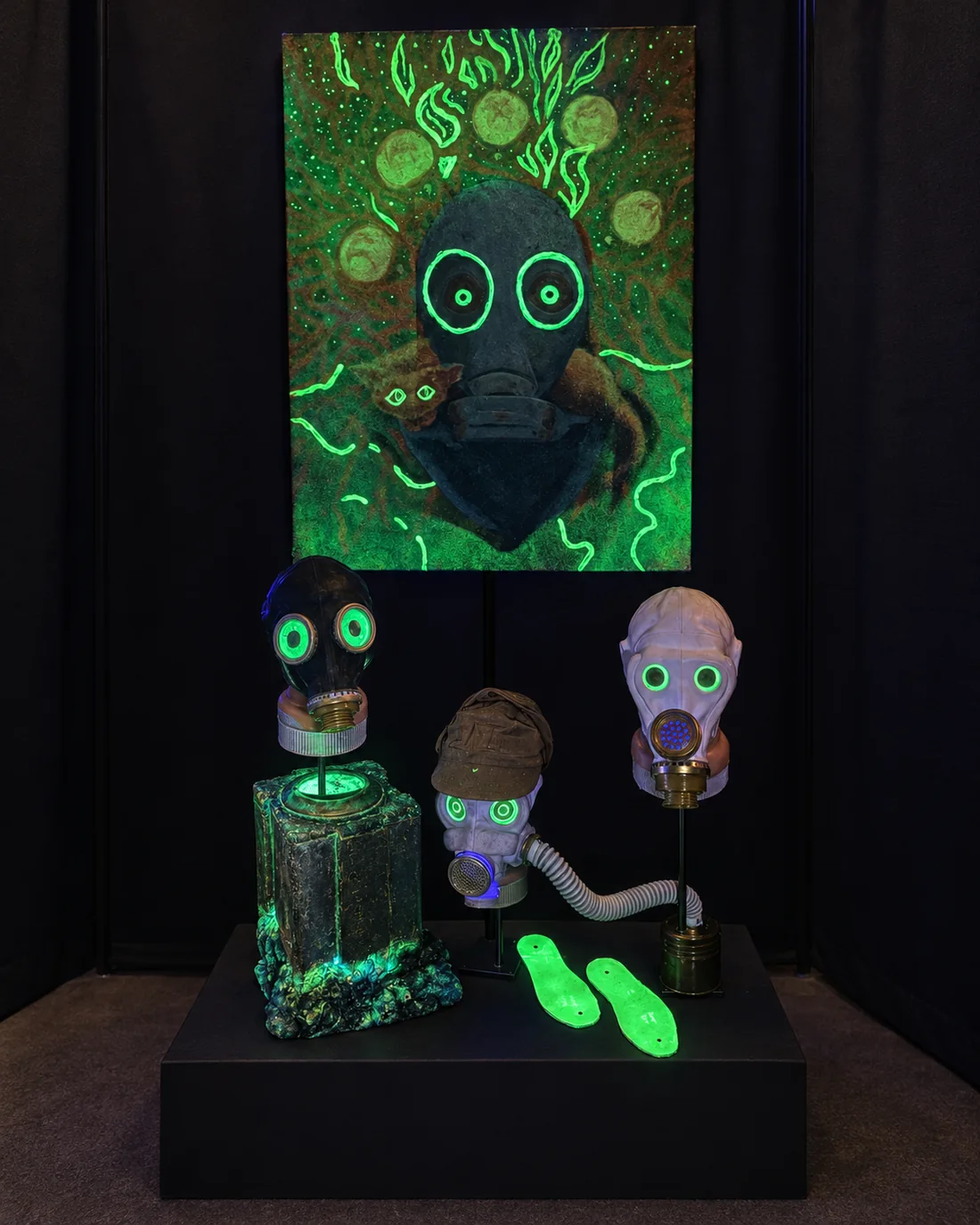
Masks catch the green light. At the exhibition, the turntable will play Sounds of Chornobyl. Here memory takes shape, colour and a voice to hear in person.
ART / LIGHT AND SCENT
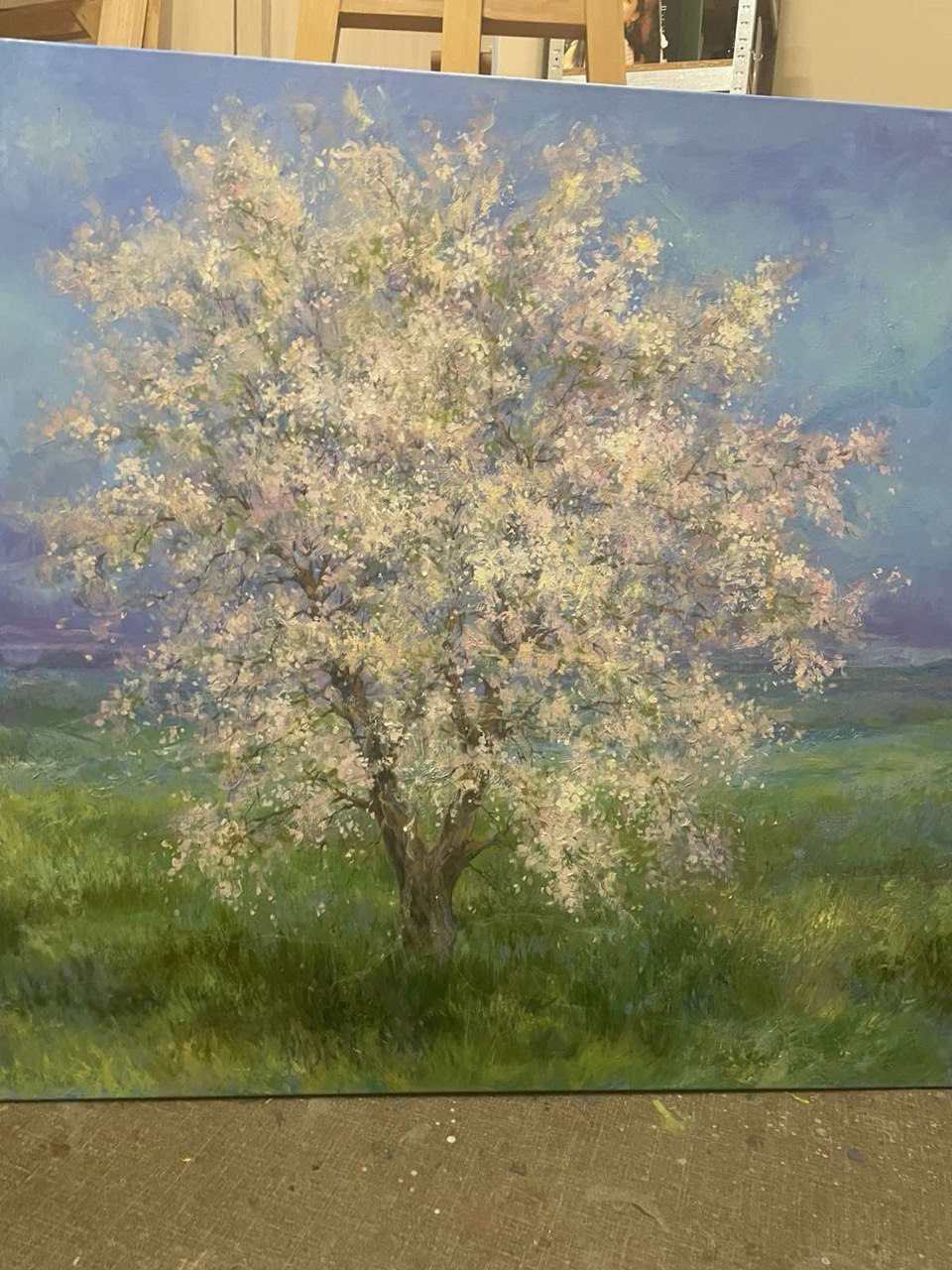
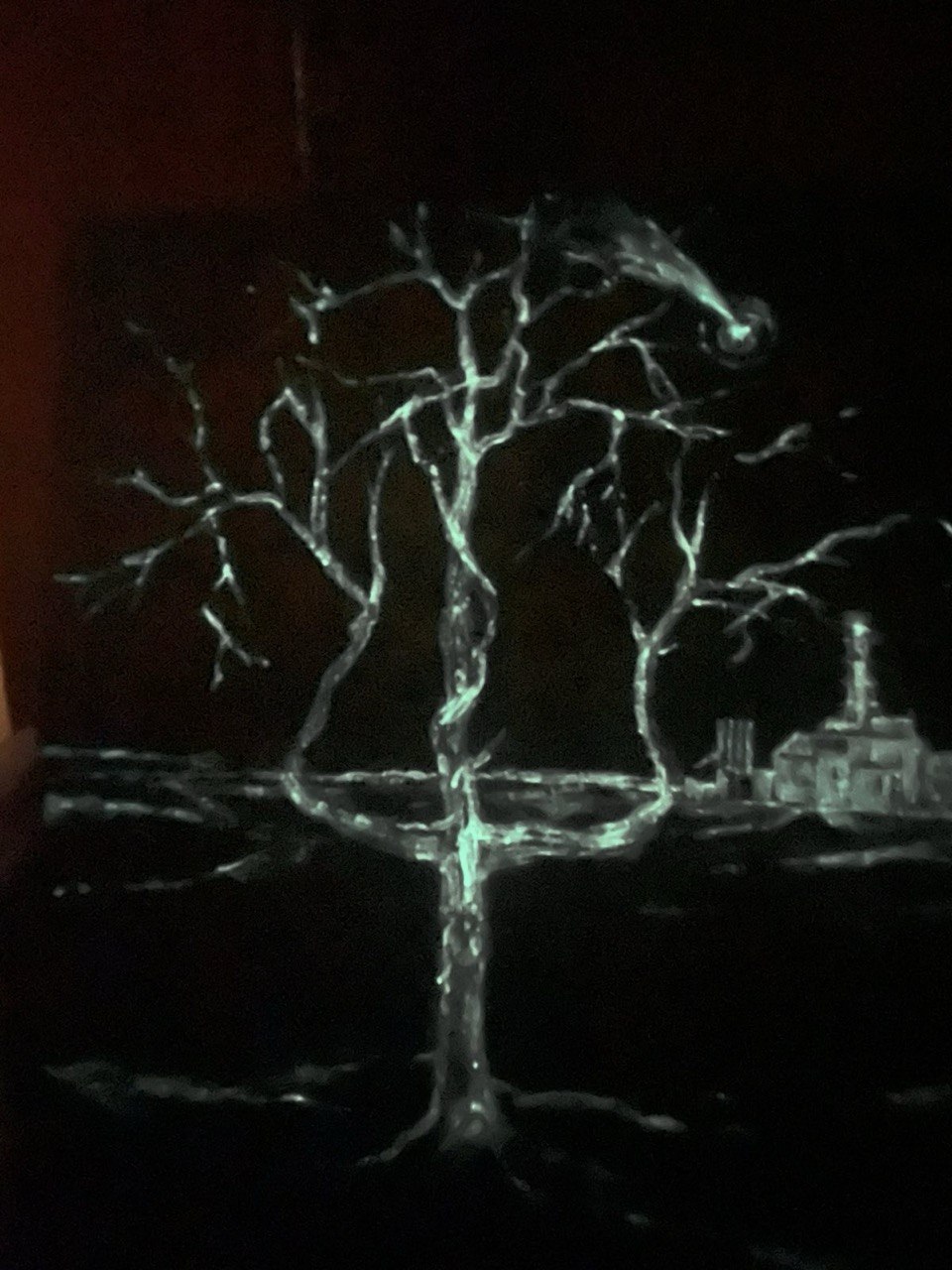
“Ukraine. Chornobyl. Rebirth” by Yuliia Chemerys has two visual states. In the light, a tree is in bloom. In darkness, luminous branches and the outline of the plant emerge. Switch the light to see it change.
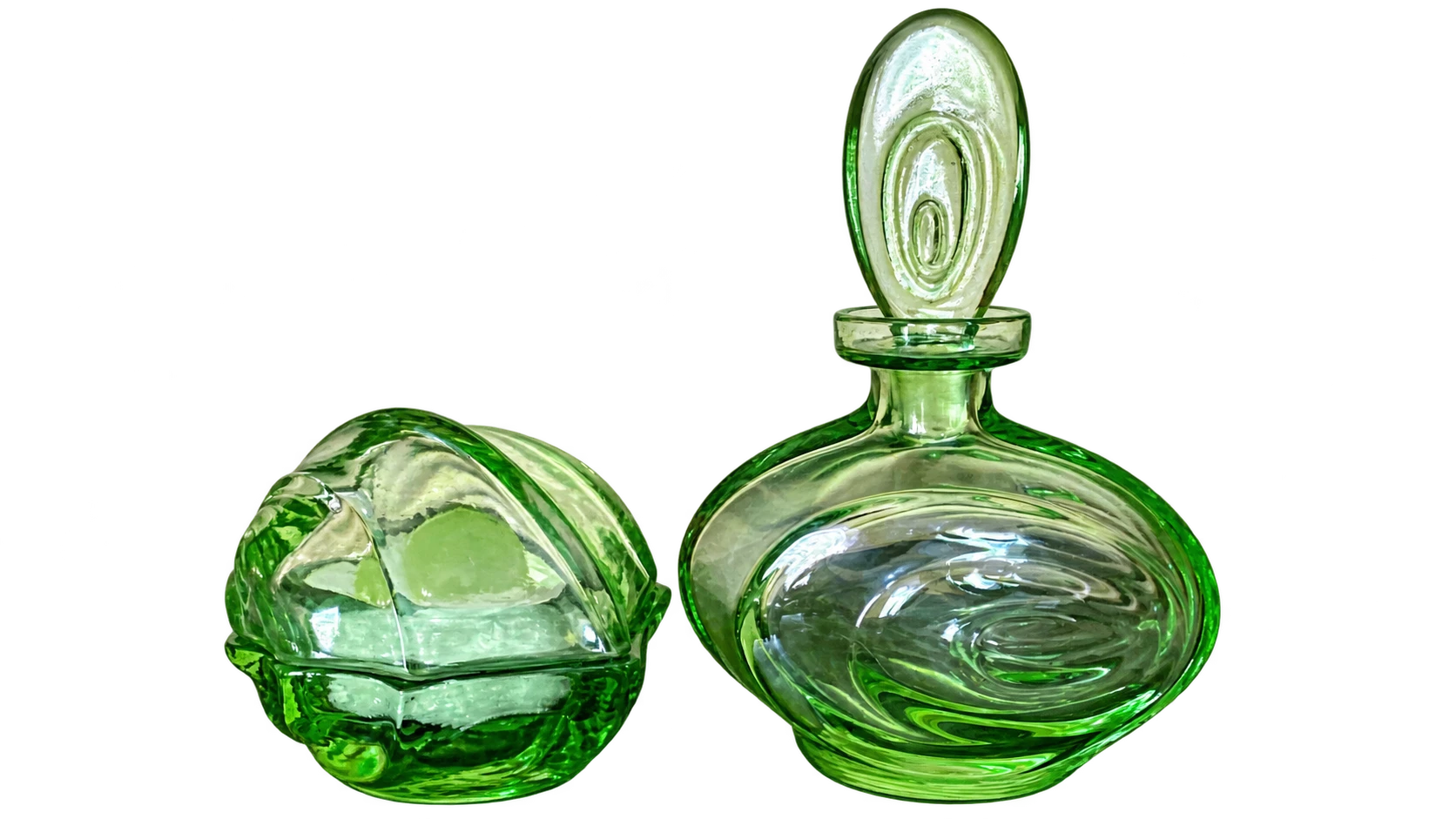
Beside the painting are bottles of a Chornobyl scent created by perfumer Yevhen Lazorchuk. Visitors will be able to see both states of the work and experience the scent at the exhibition.
Painting photographs supplied by the museum; bottles visualized from an object photographANOTHER GAZE / IVAN MARCHUK
Beside the painting transformed by darkness is a very different visual language. In Ivan Marchuk’s work, a face and hands emerge from a dense weave of lines. Open four details for a closer look.
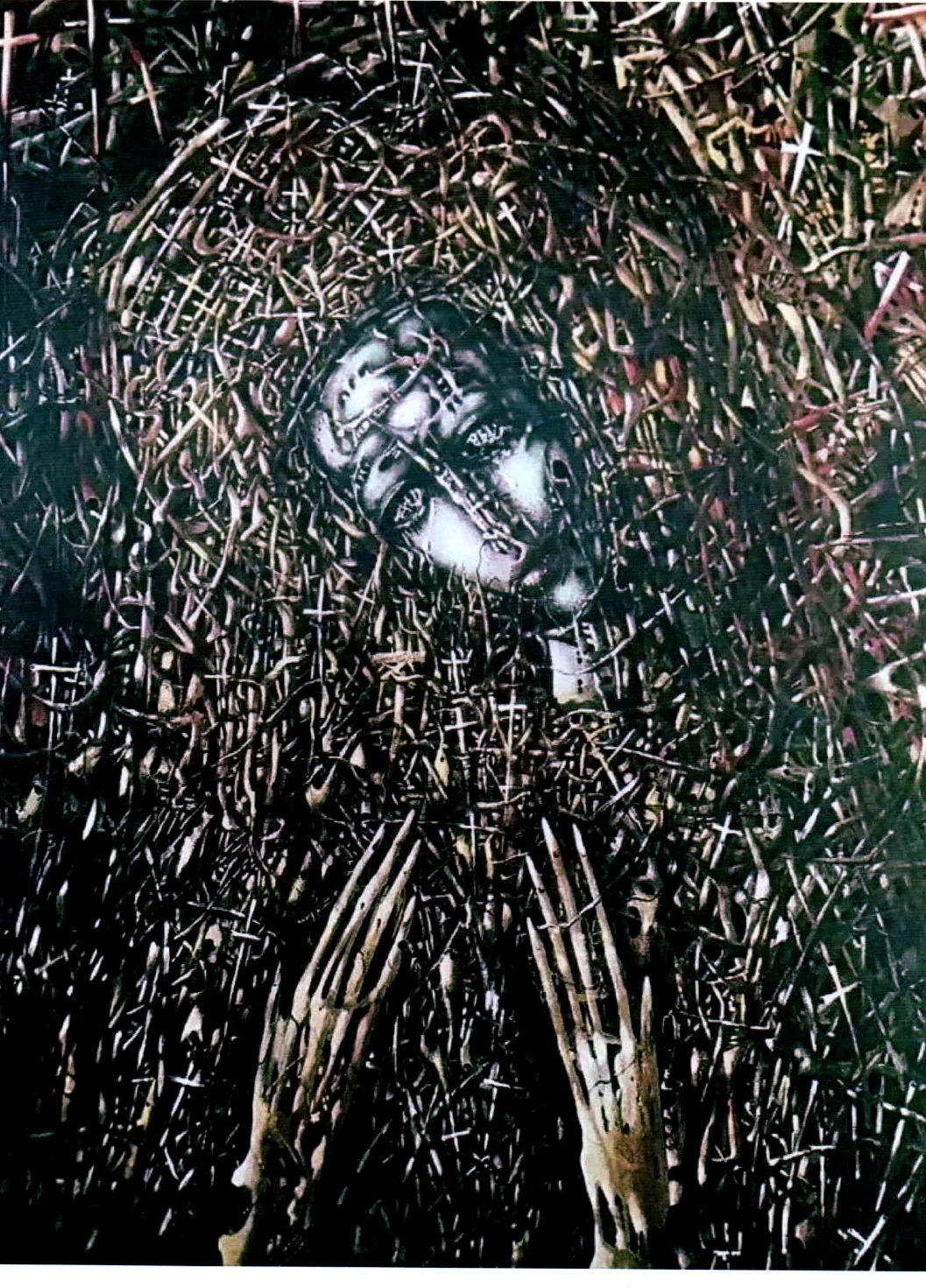
The face does not appear at once. It seems to gather out of darkness and fine lines.
The hands beside the face are among the work’s most arresting gestures. Up close, they hold our gaze.
Dense crossing strokes fill almost the entire surface. From a distance they form an image; close up, they become separate movements of the hand.
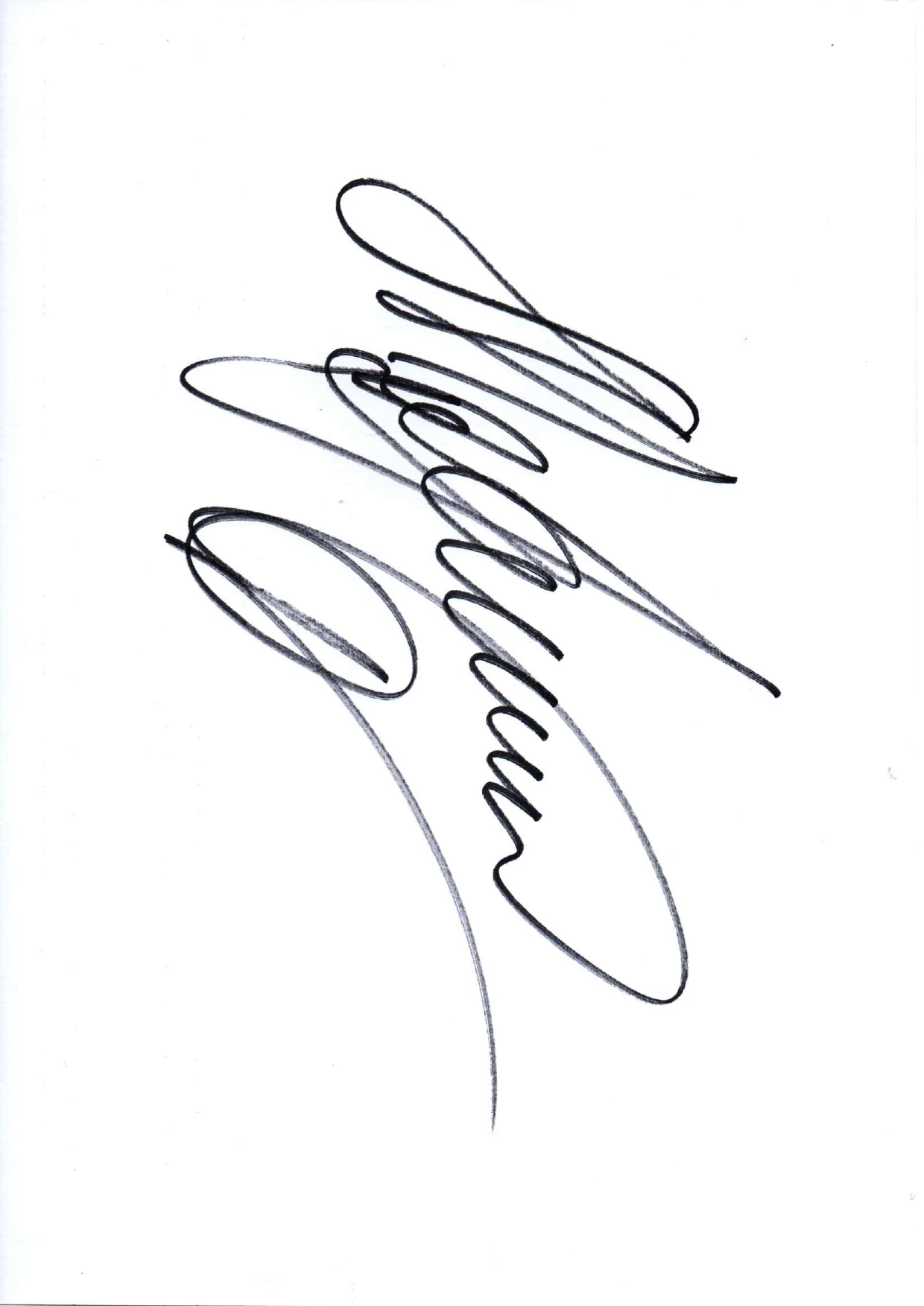
Beyond the image is Ivan Marchuk’s autograph. Open this detail to see the signature in the material supplied by the museum.
Open the full-size image ↗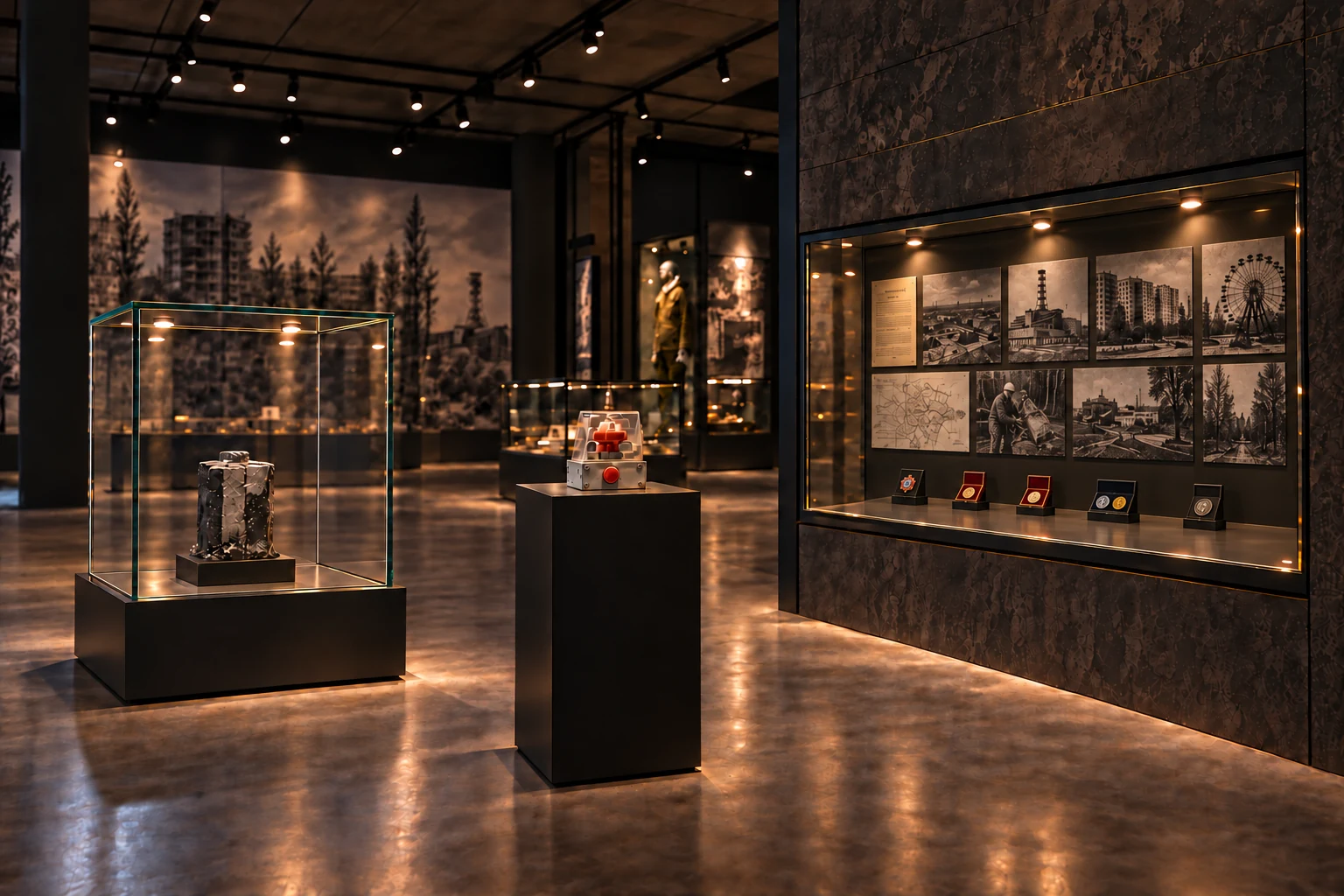
AN EXHIBITION ON THE MOVE
A screen shows the shape of an object. In person, you can sense its size, material and the quiet space between exhibits. The exhibition will travel between cities and countries; dates for future stops will appear here.
SEE YOU WHERE YOU CAN COME CLOSER01 — 03 / Three installations
Choose an area of the gallery and look closer.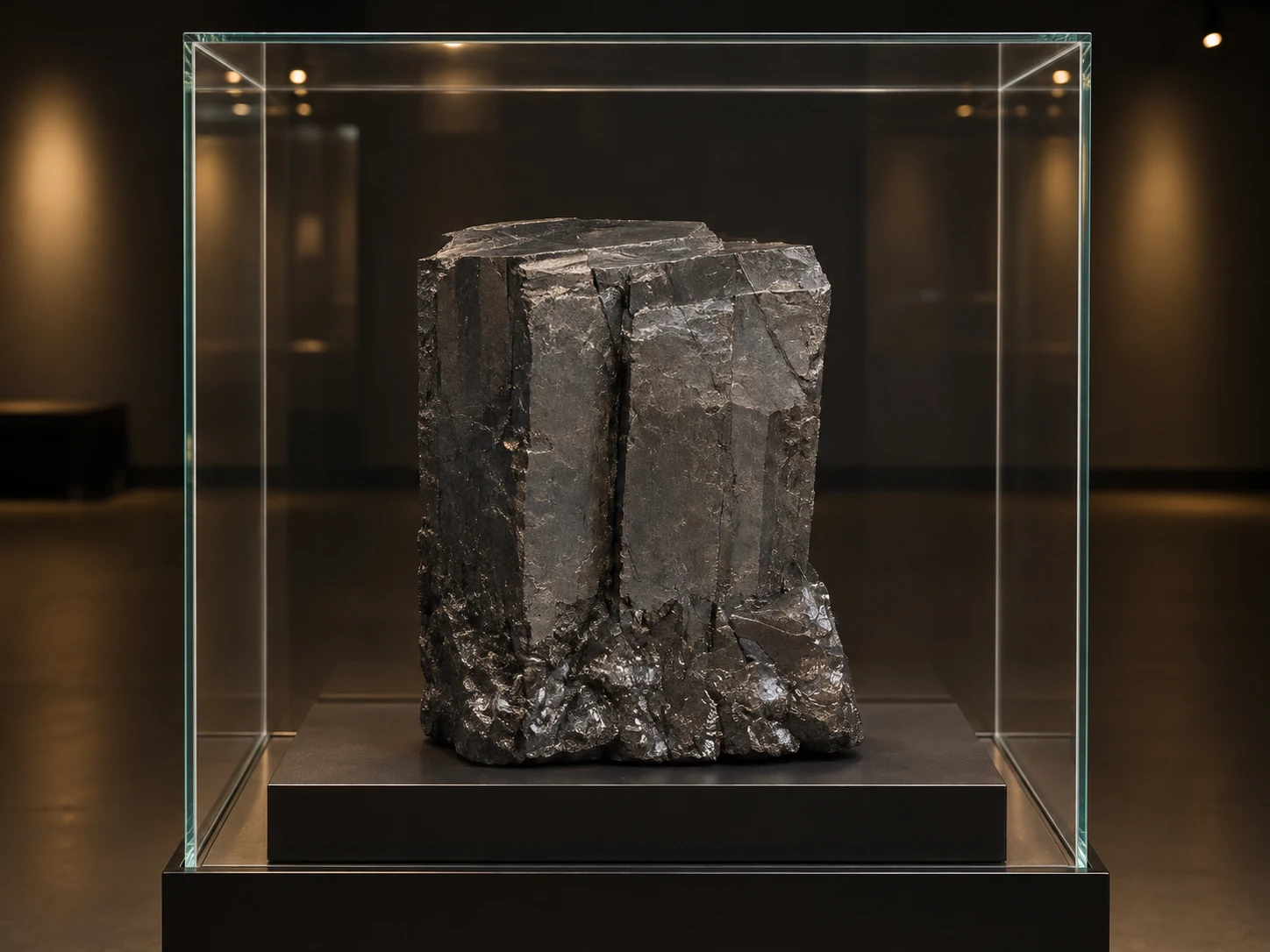
A small graphite rod stands on a mount in its own glass case. Up close, its uneven edges and texture become visible in a way a wide photograph cannot convey.
Exhibition visualisation based on an object photograph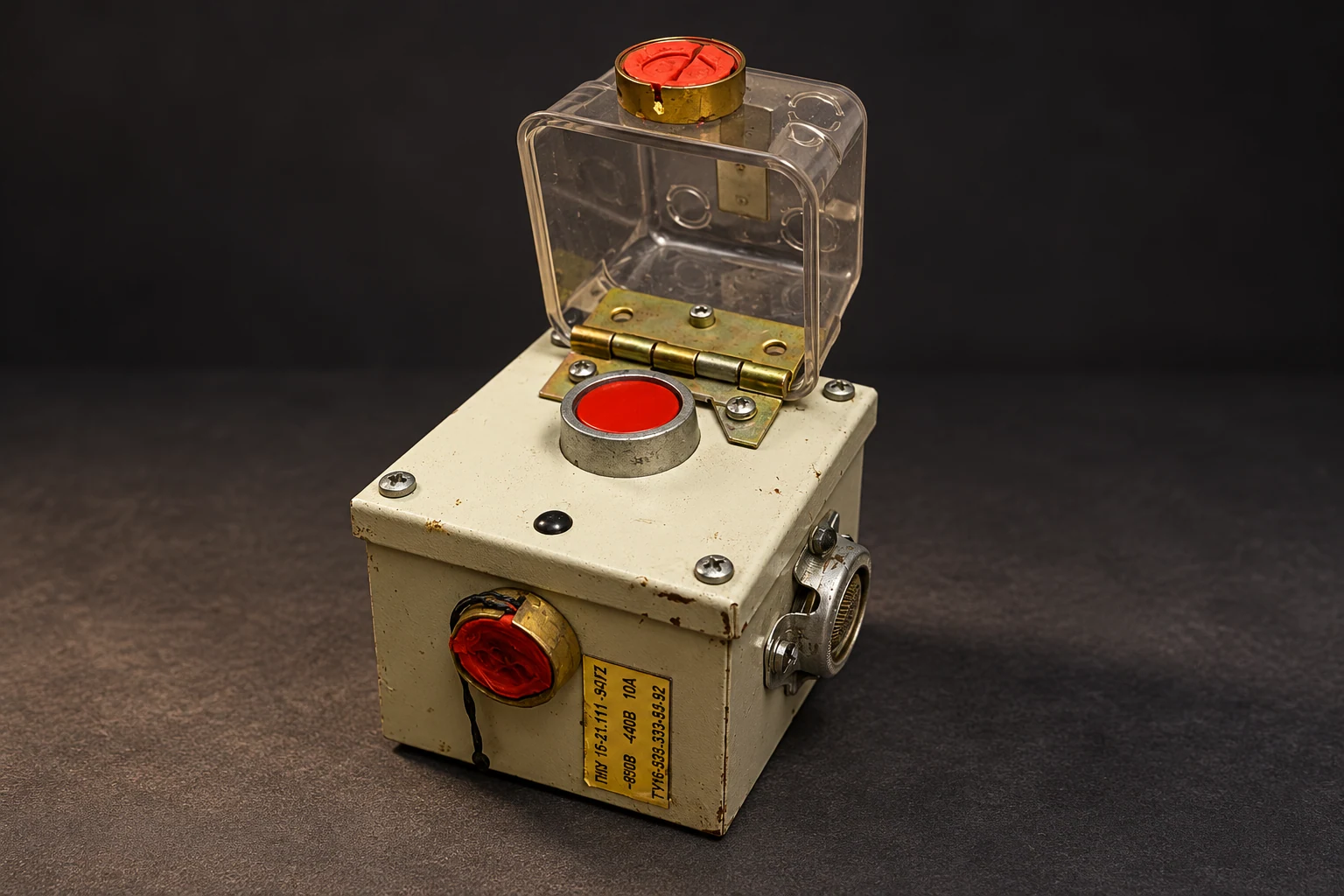
A separate pedestal draws attention to a single hand movement. This is a replica AZ‑5 button; pressing it here starts the first minute of the supplied video with sound.
Exhibition visualisation based on an object photographYouTube plays the first minute after you press. The museum has not authenticated the recording in the video.
Open the source video on YouTube ↗Six pieces stand in cases along the bottom shelf, with photographs of Chornobyl and Pripyat behind them: a liquidator medal, two Slavutych pieces, a pair of 25th anniversary medals and a coin from Niue.
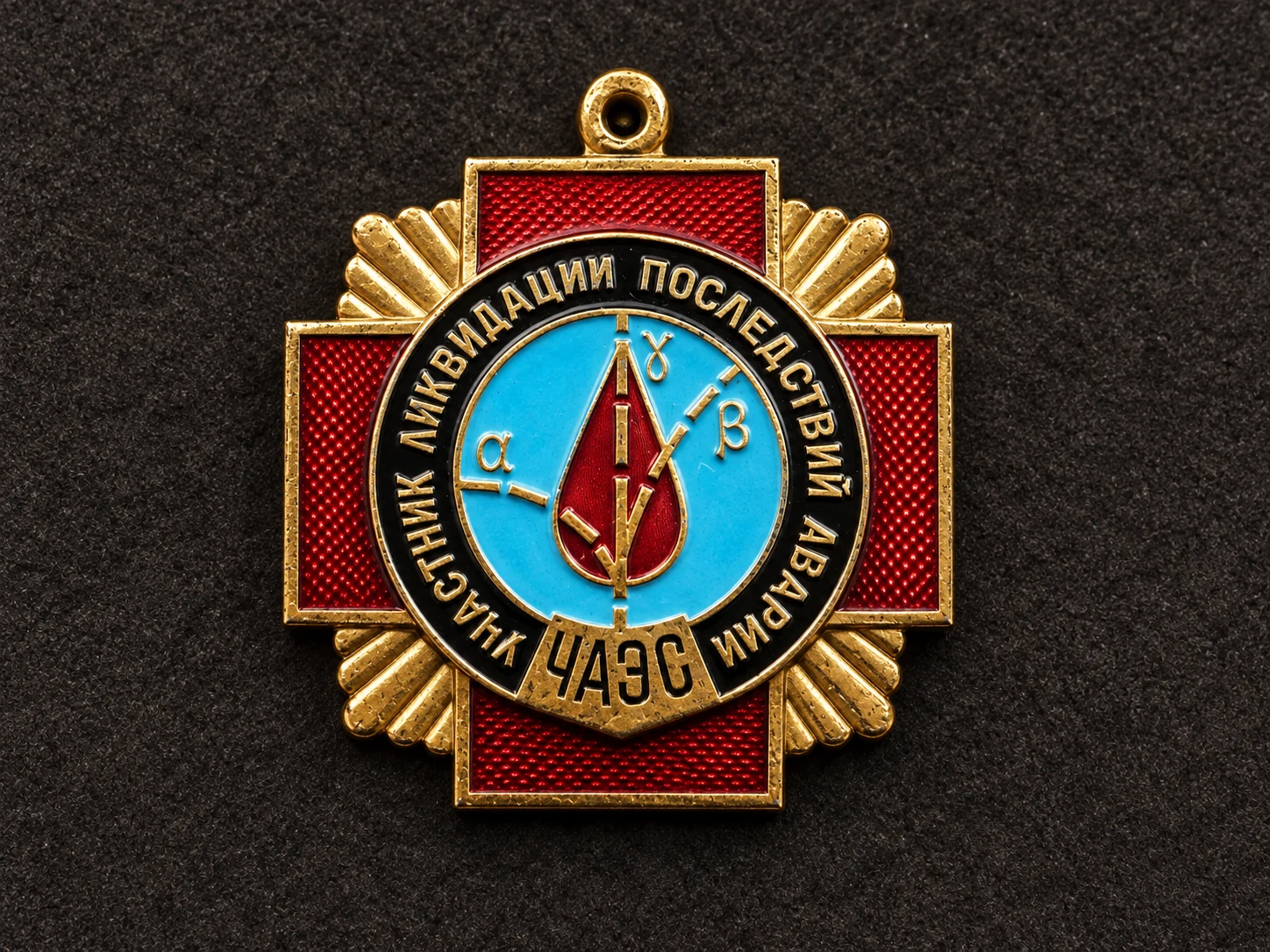
The medal “To a Participant in the Cleanup of the Chornobyl Nuclear Power Plant Accident”. On its blue field, a red drop of blood is pierced by rays marked α, β and γ, symbolising alpha, beta and gamma radiation.
Exhibition visualisation based on an object photograph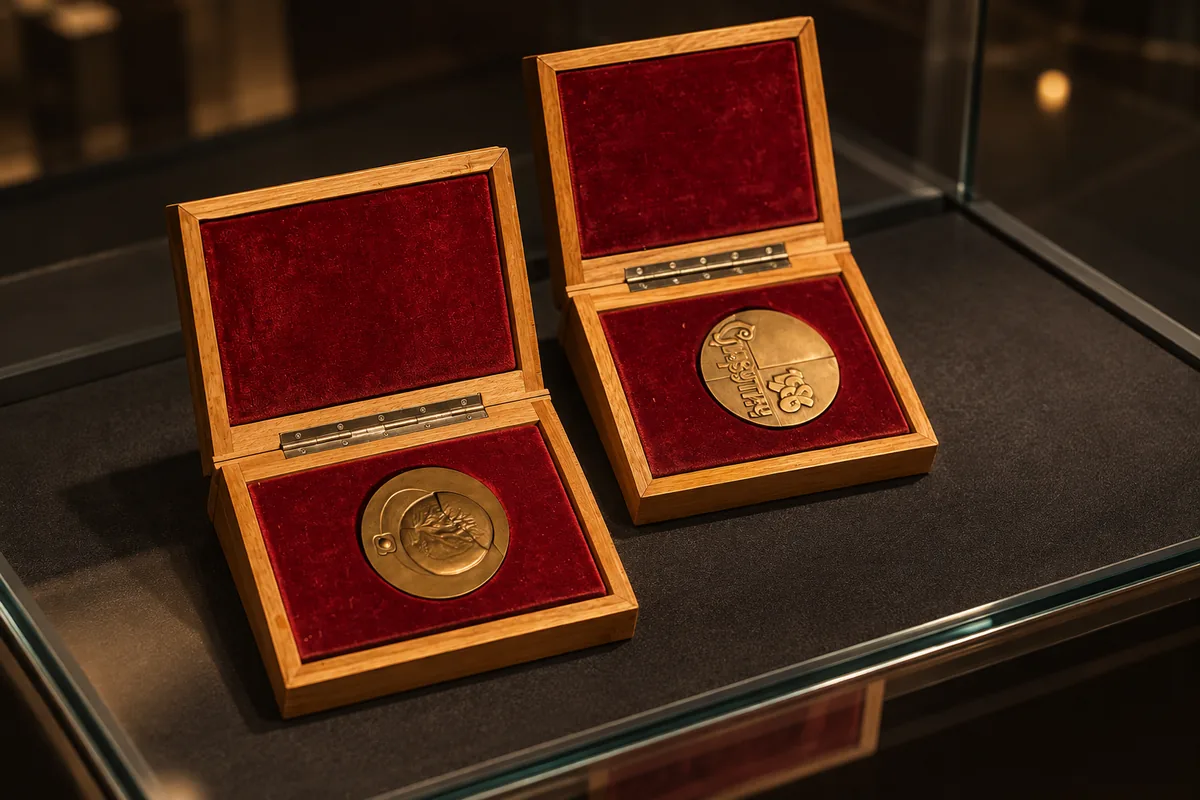
The two parts of one medal sit in separate wooden cases lined with red velvet. The left part bears a leaf relief; the right bears “Slavutych” and “1986”. Together they form a folding medal.
Exhibition visualisation based on an object photograph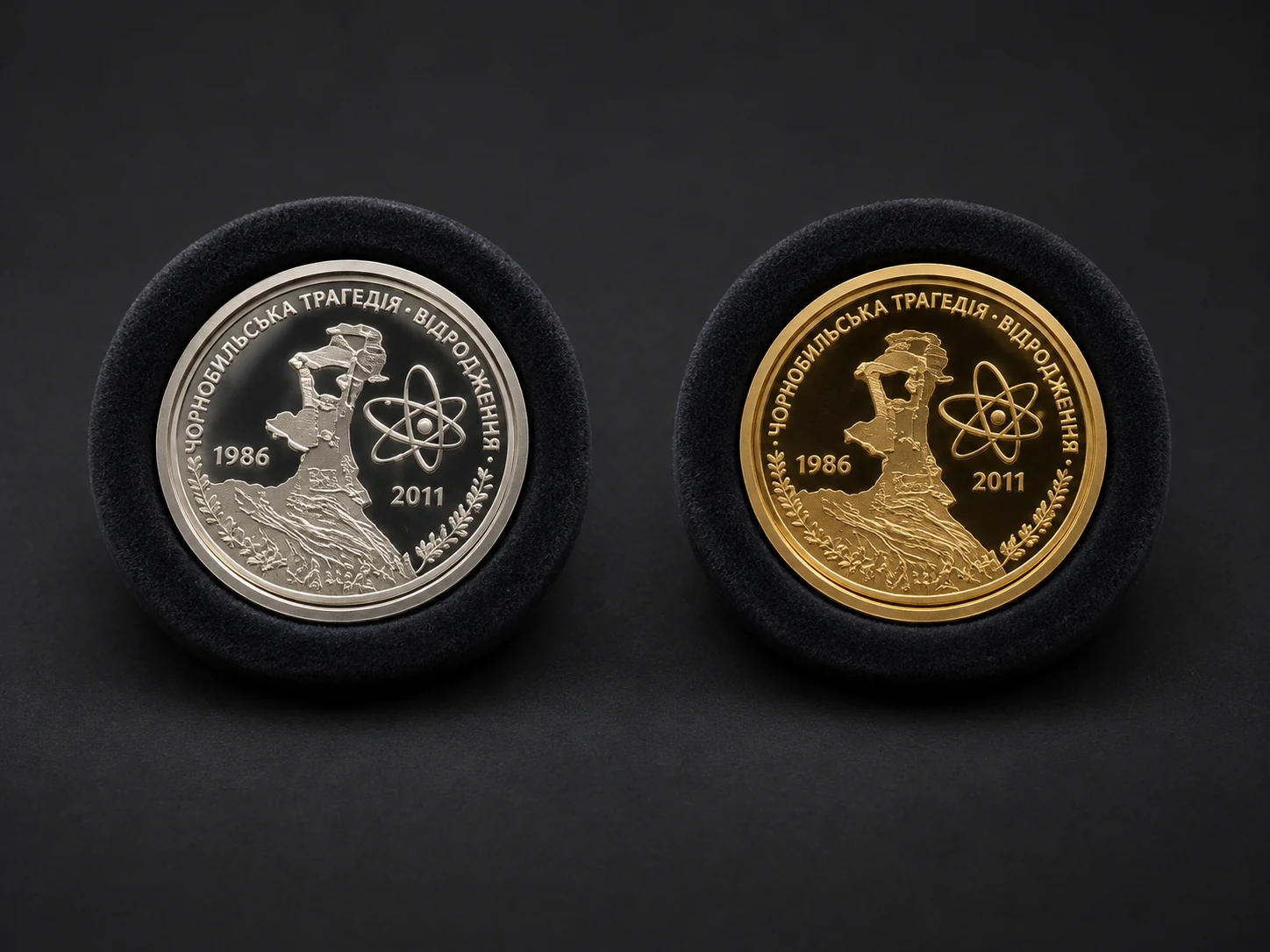
Two silver medals mark the 25th anniversary of Chornobyl: one is set with a diamond, the other is gilded and set with a ruby. The shared photograph lets you compare them side by side.
Exhibition visualisation based on an object photograph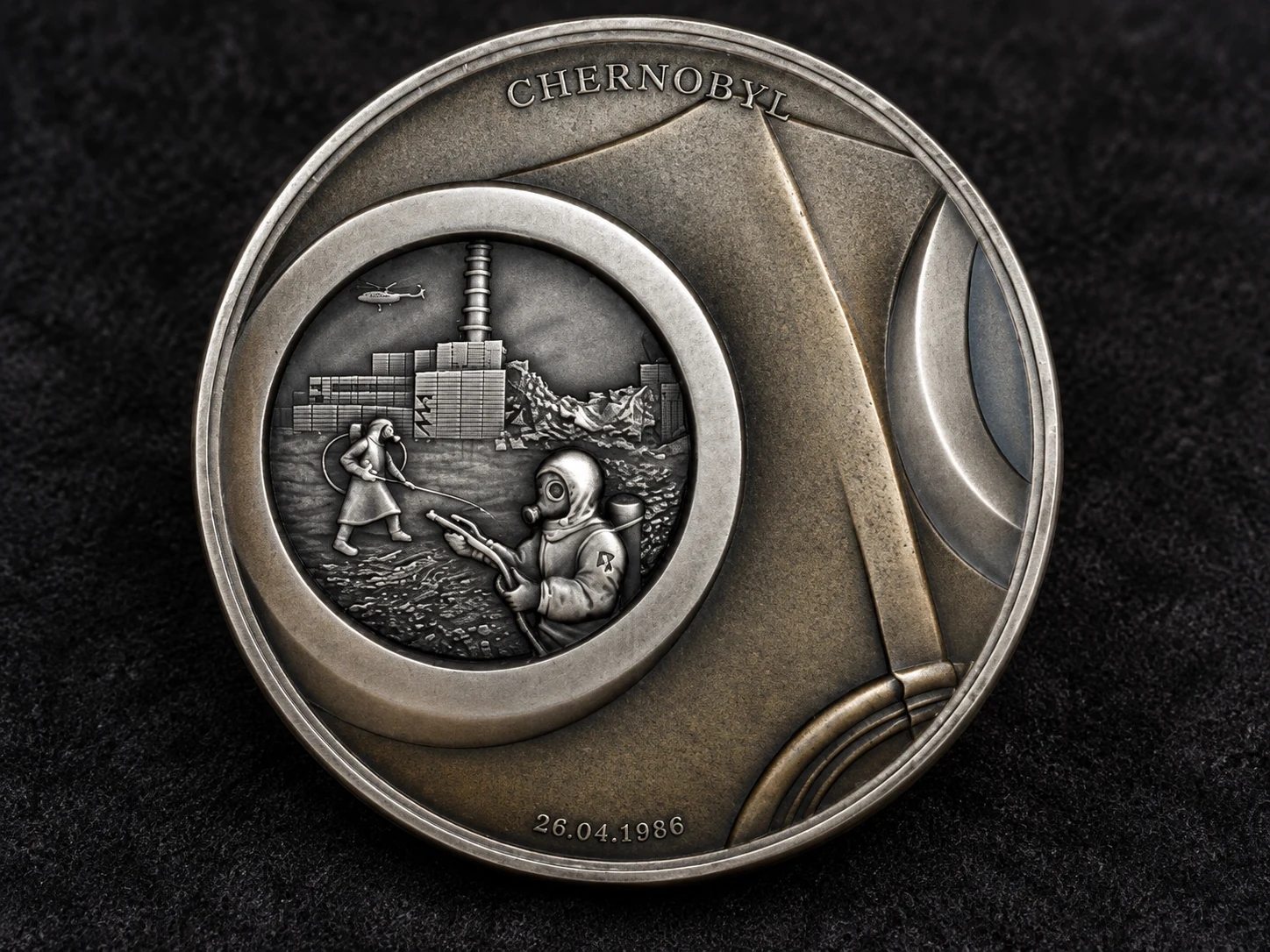
A 2021 silver commemorative coin from Niue. Its relief depicts the plant and people in protective equipment.
Exhibition visualisation based on an object photograph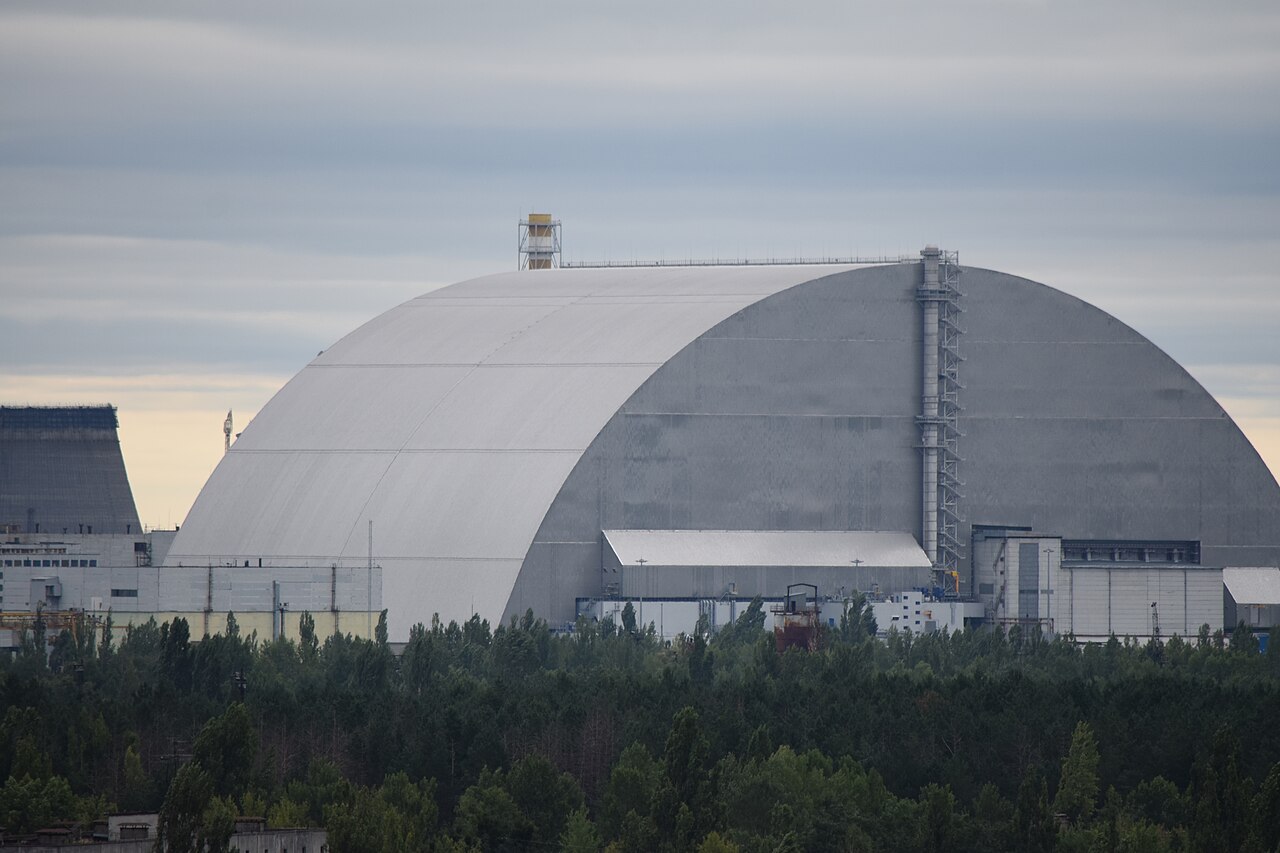
01 / AFTER THE ACCIDENT / ENGINEERING
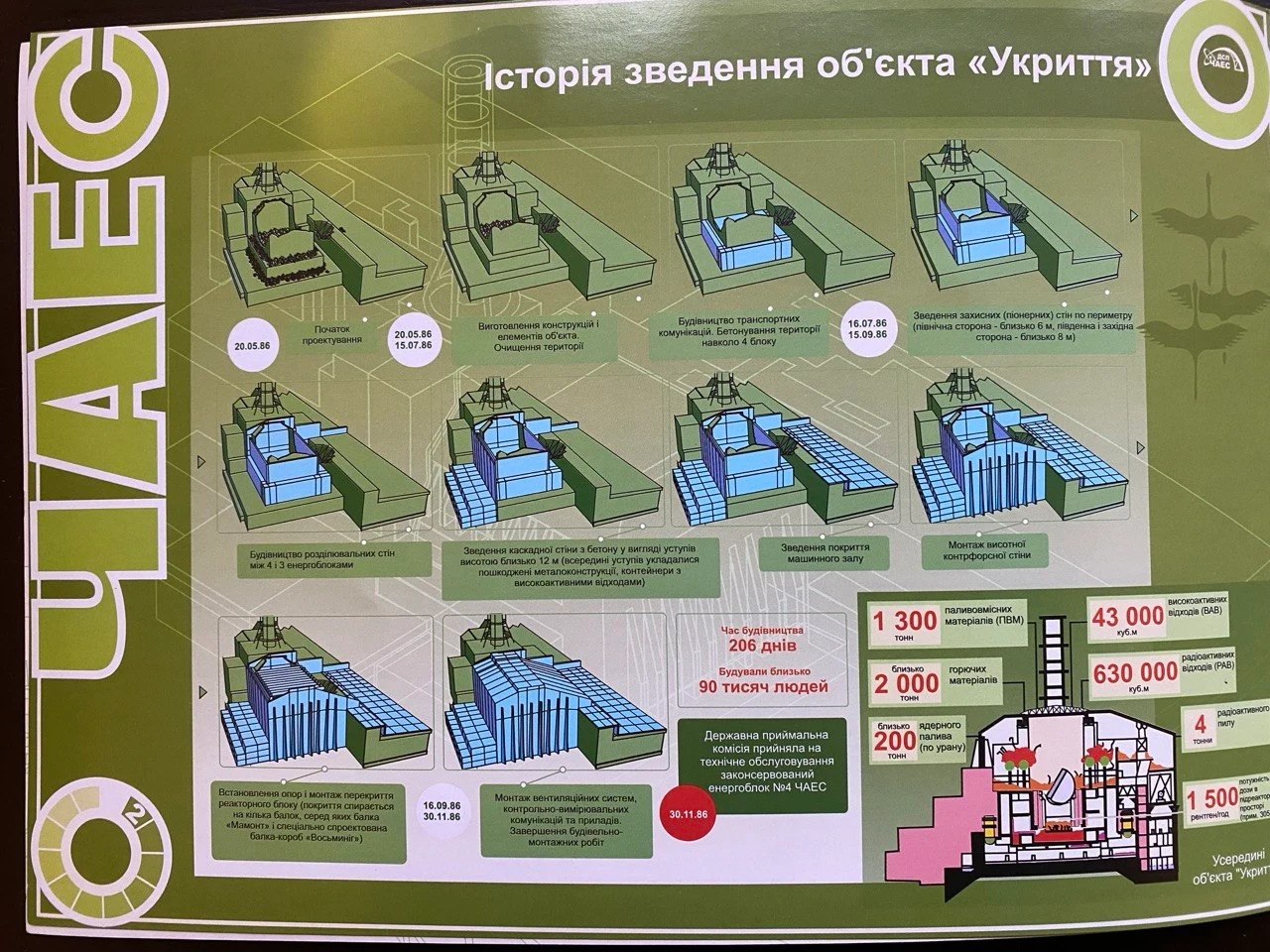
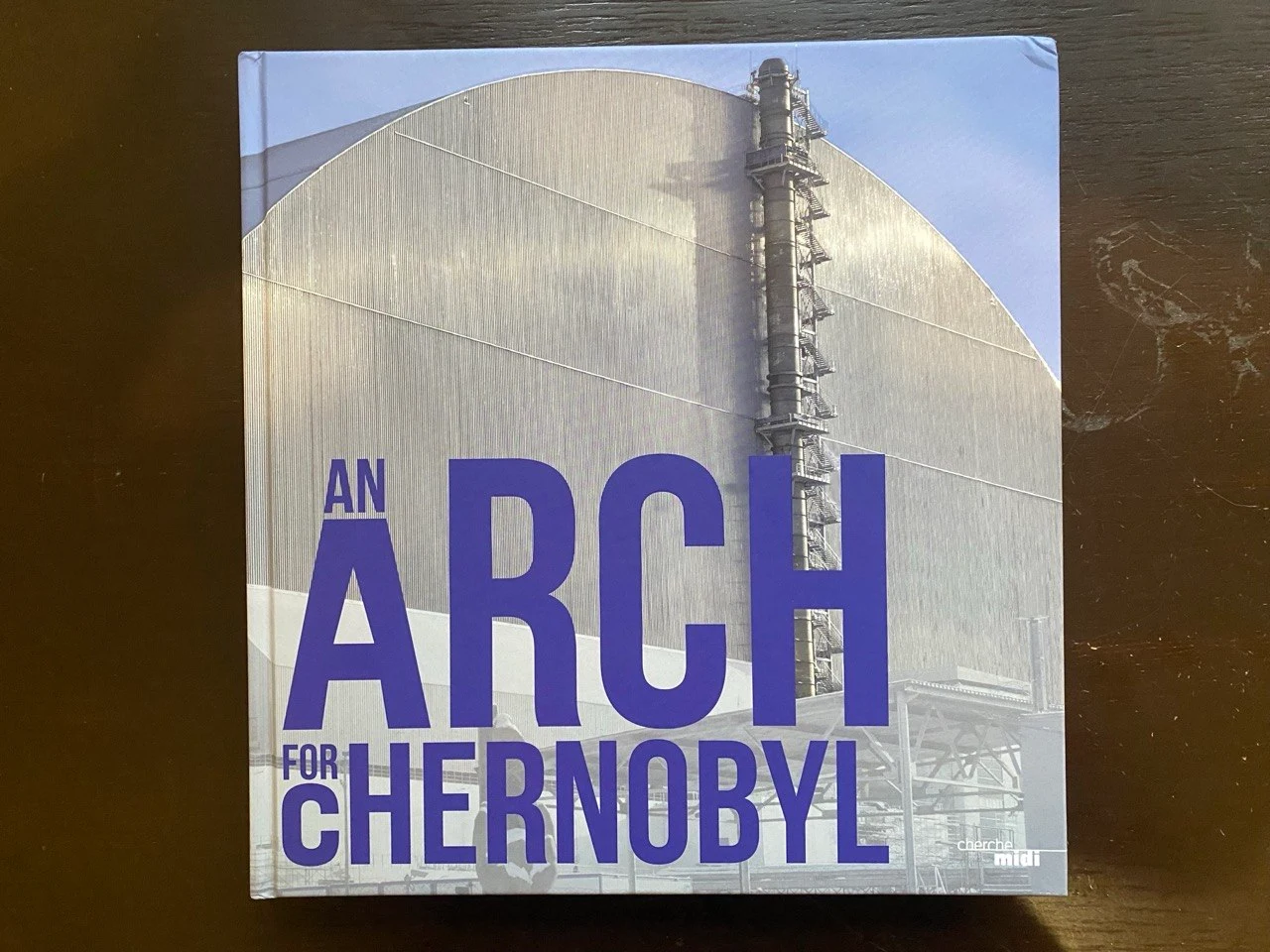
The first Shelter enclosed the destroyed reactor in 1986. Three decades later, a new steel arch covered it. Behind both monumental structures stood human work and the precision of every connection.
 Museum object photograph · Open full-size image ↗
 02 / Museum object photograph
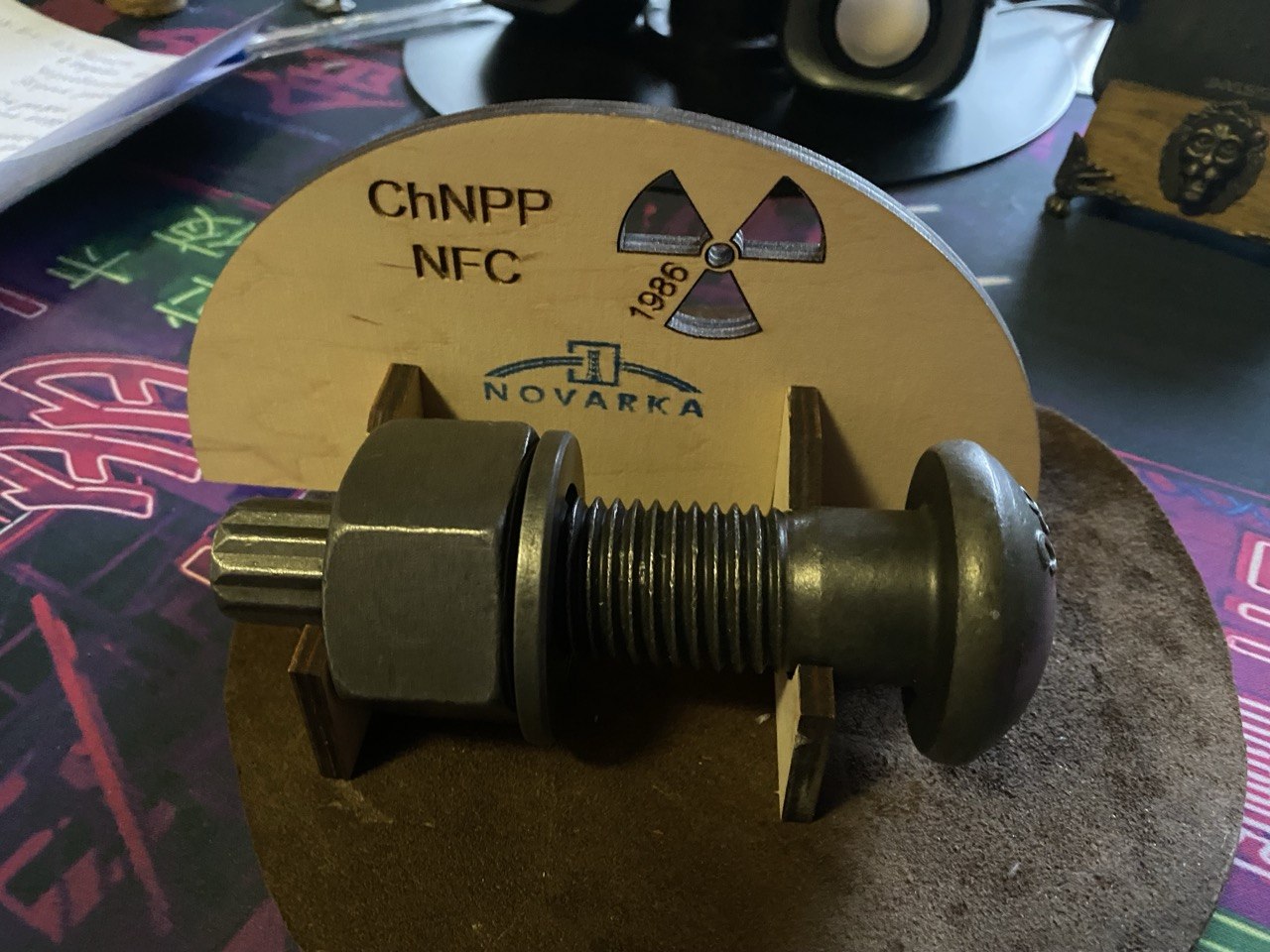
An authentic assembly bolt from the arch, displayed on its museum stand. The structure was assembled away from the reactor and slid over Unit 4 in 2016. Open the steps below to follow its story.
A protective structure was built over the remains of Unit 4 after the accident. The acceptance certificate for the Shelter was signed on 30 November 1986.
The New Safe Confinement was assembled away from the reactor to reduce worker exposure. In November 2016 it was slid over the old Shelter.
After sealing and system tests, the arch was commissioned and handed over to Ukraine. It also provides for future safe dismantling of unstable parts of the old Shelter.
EBRD film · English · starts on request
EBRD / Source ↗02 / THE ZONE / PHOTO CHRONICLE
Fifty photographs of empty streets, rooms and machinery in the exclusion zone. They were taken in 2018–2021; each image shows its capture year.

03 / THE ZONE / WILDLIFE
The exclusion zone remains restricted and carries a radioactive legacy. Yet the reserve monitors wild animals here: Przewalski’s horses, lynx and elk. Three commemorative coins from the museum collection open their stories.
Fifty views of wildlife, forests and greenery returning to the streets of Pripyat.

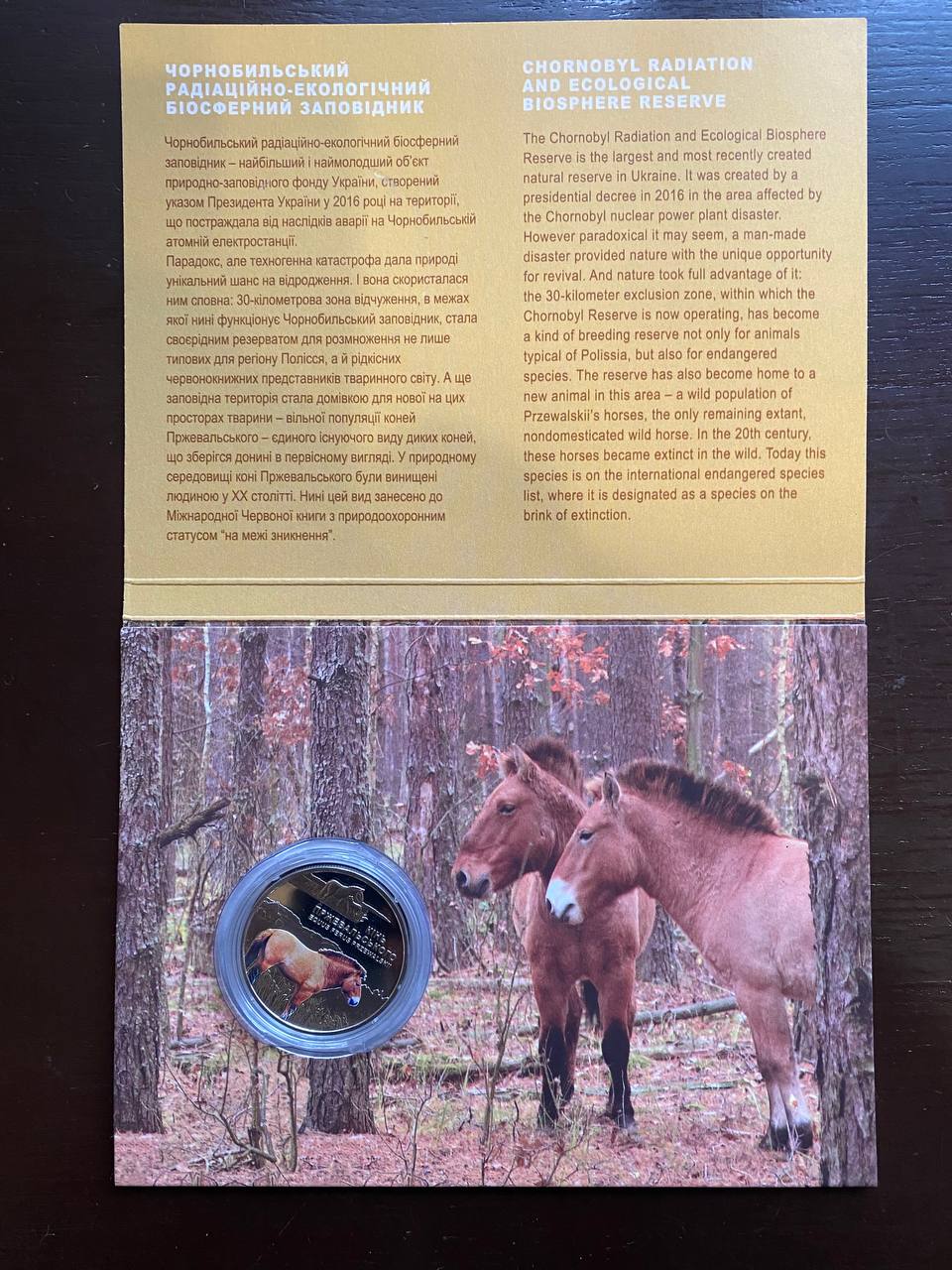
01 / Museum object photograph
Several herds of these wild horses are monitored in the reserve. The coin shows the animal; the accompanying booklet offers a photograph and the story of its recovery.
Open full-size image ↗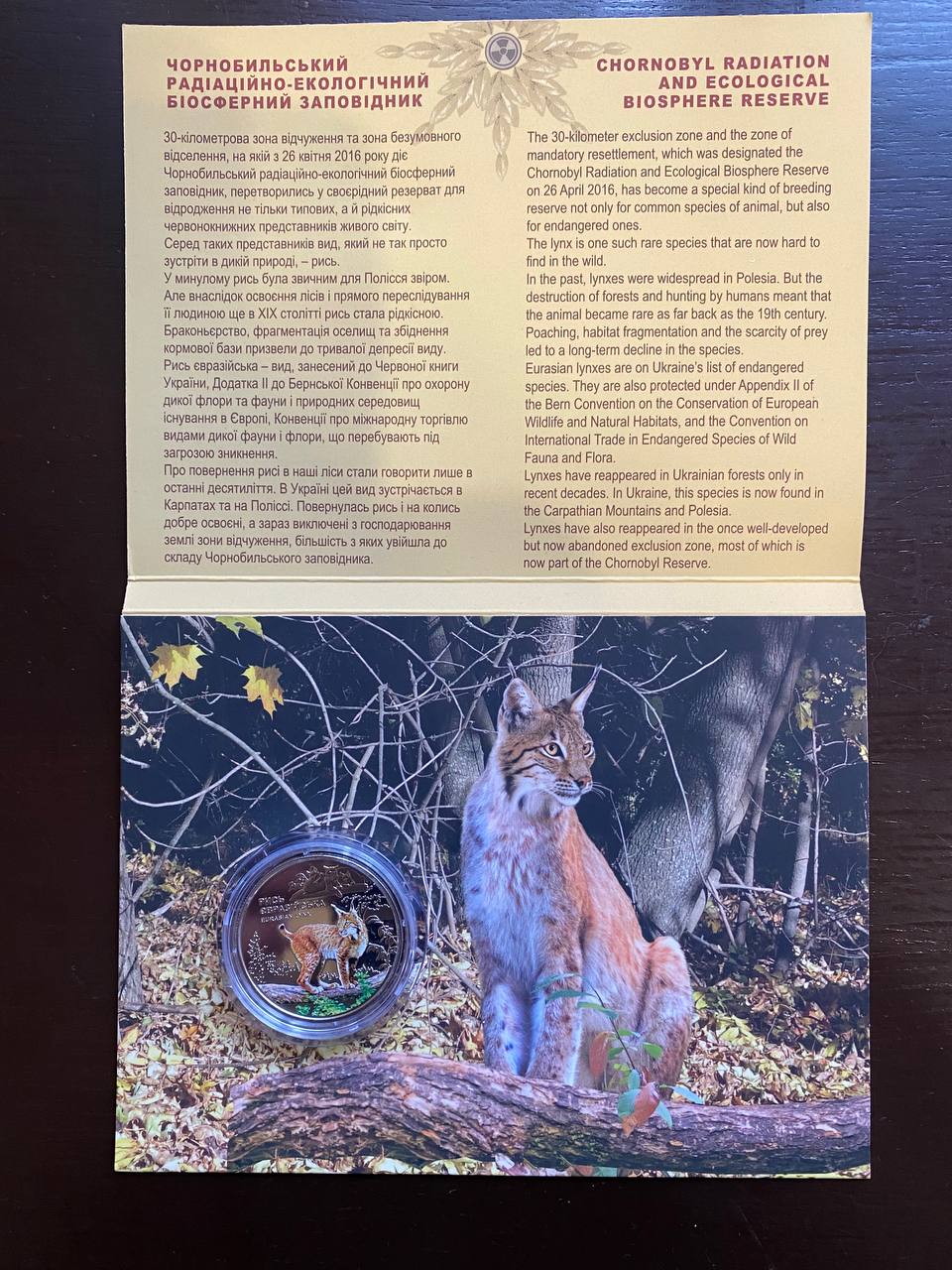
02 / Museum object photograph
The lynx is a rare, elusive predator of the Polissia forests. Researchers record it with camera traps; this coin portrays it among woodland.
Open full-size image ↗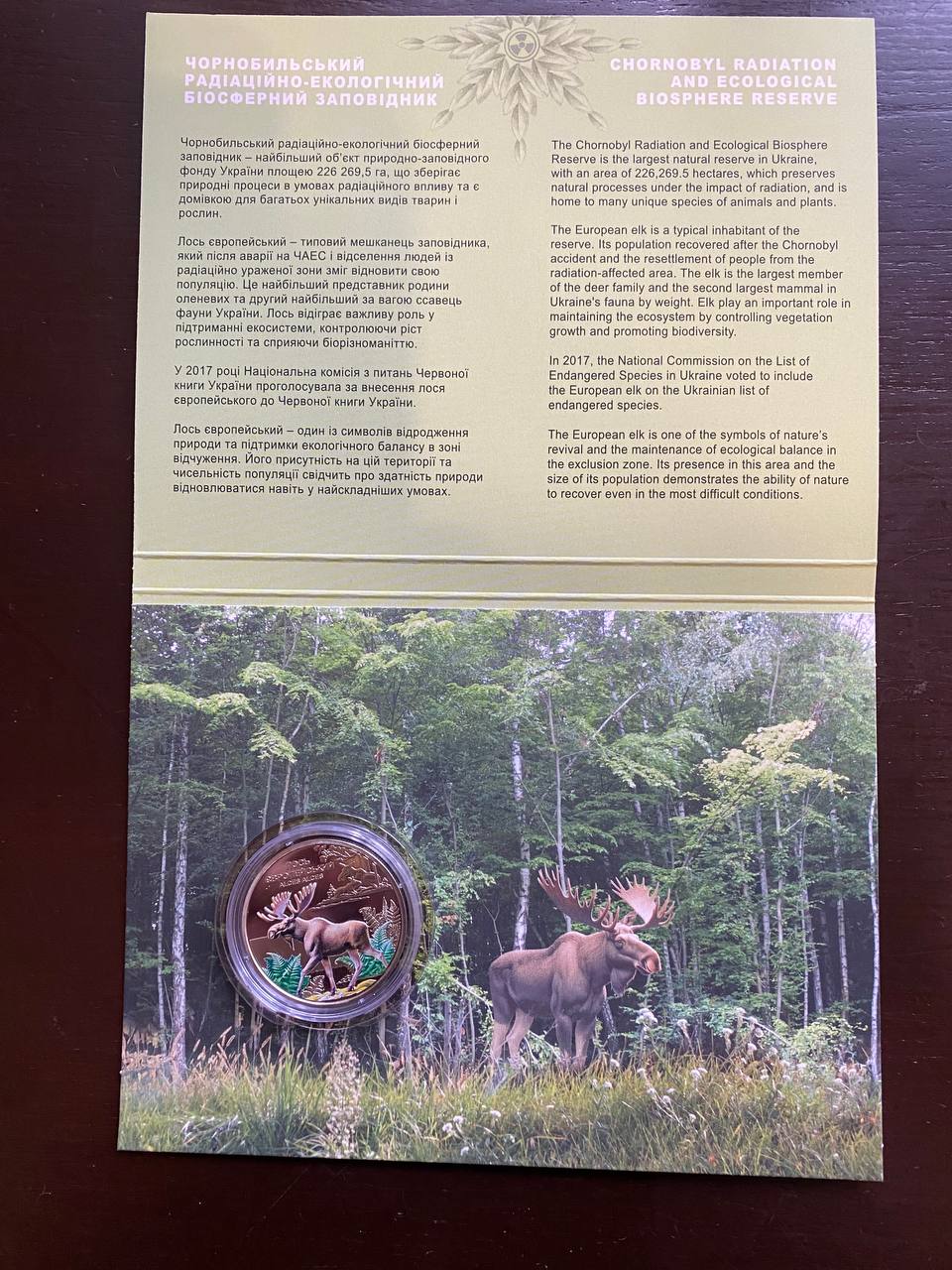
03 / Museum object photograph
Elk are among the reserve’s largest herbivores. Their tracks and presence help researchers monitor ecosystem change.
Open full-size image ↗04 / THE ARCH / 14 FEB 2025
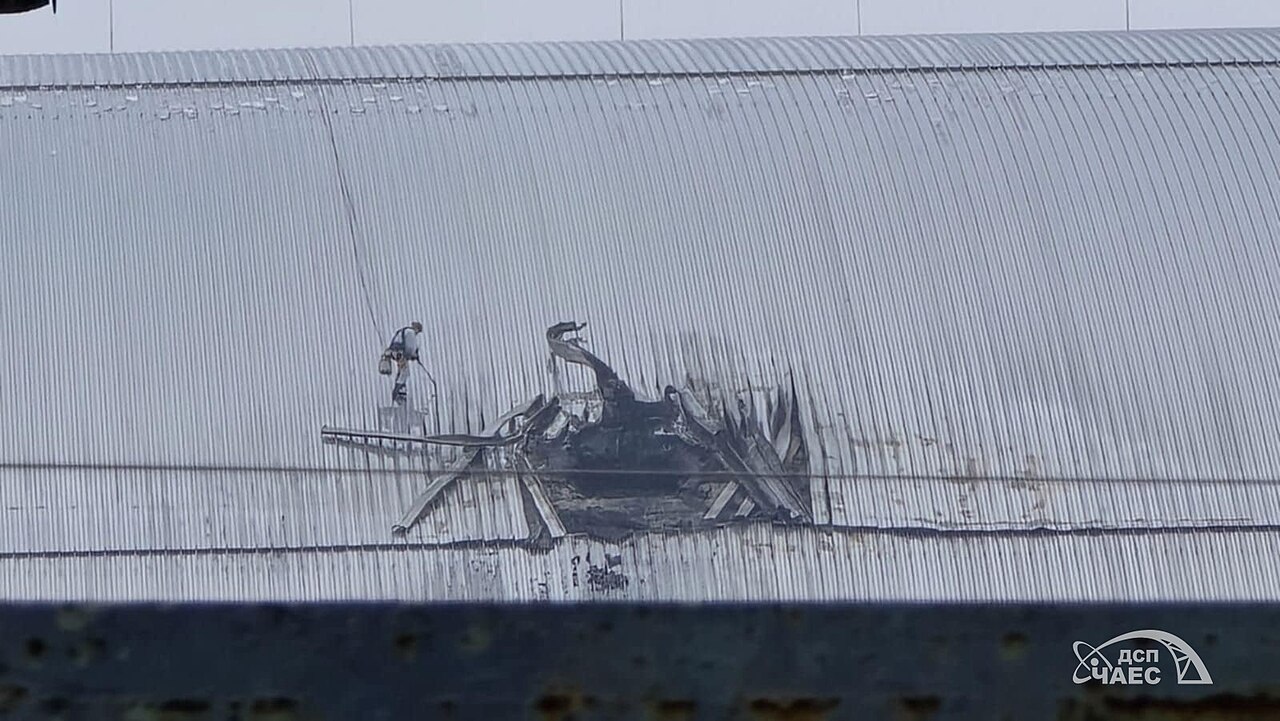
On 14 February 2025, a Russian drone struck the New Safe Confinement. Cladding and some of the arch’s systems were damaged. This Chornobyl NPP image shows the impact site; monitoring after the attack found no radiation level above control limits.
The impact breached the outer and inner shells. A fire in the structure complicated repair of the protective barrier.
The arch contains radioactive dust and provides a workspace for dismantling the old Shelter. The damage affected both functions.
Chornobyl NPP, the IAEA and international partners are assessing damage and preparing repairs. Follow the official sources below for updates.